Why ESG Ratings Matter for Companies and Investors
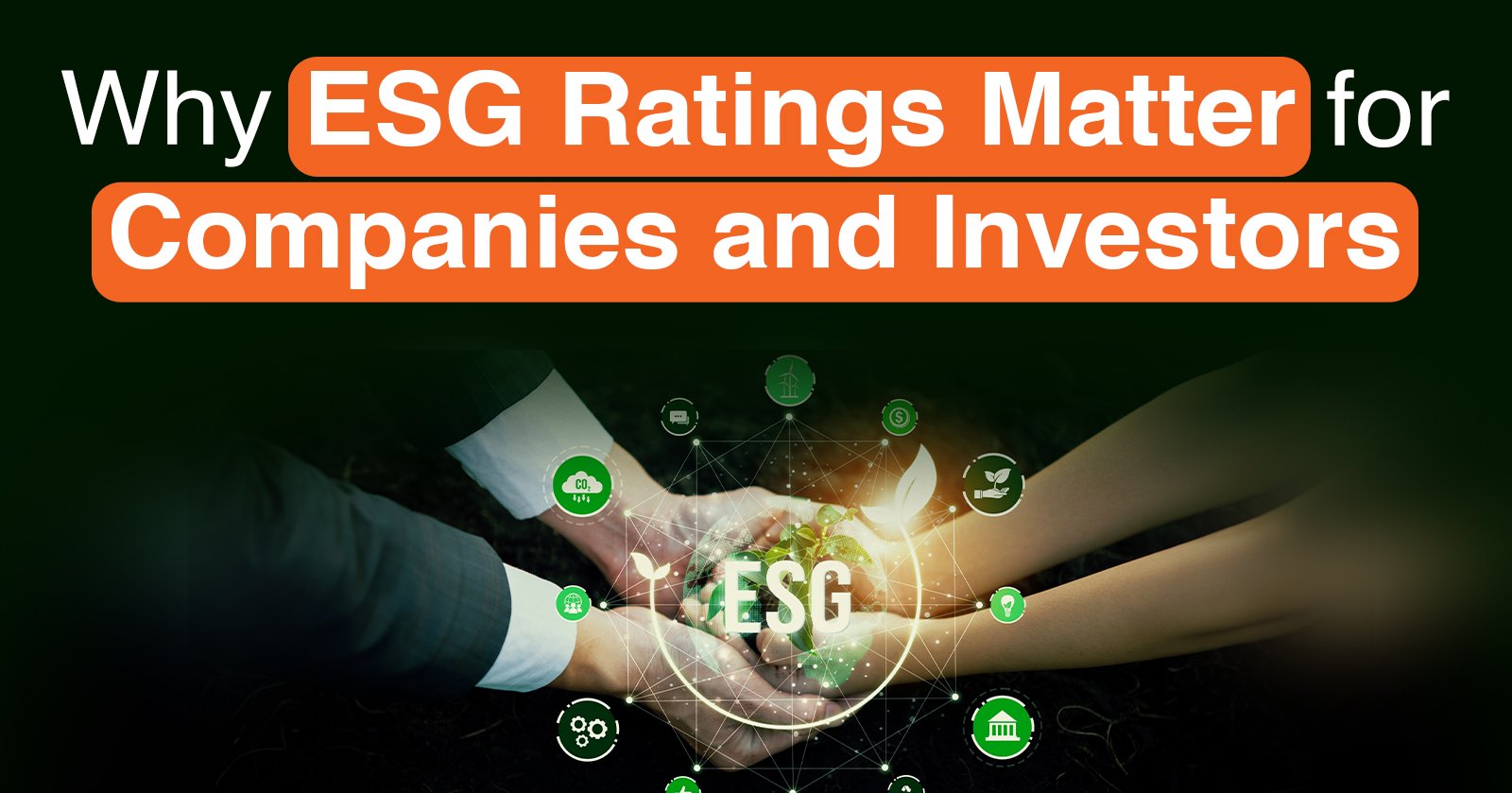
Nowadays, environmental, social, and governance (ESG) factors play a major role. ESG ratings measure how responsibly a company operates in these areas. They are given by specialized agencies based on how well a company performs in sustainability, social responsibility, and governance.
ESG ratings help build investors trust, make better investment choices, and identify well-managed firms. For companies, good ESG reporting enhances brand reputation, attract investors, and open new opportunities.
ESG performance metrics help agencies check how sustainable a company is. Since rating methods vary, understanding ESG ratings and how to improve them is important for long-term success.
What is an ESG Rating?
ESG ratings are given by third-party agencies to show how well a company performs in its ESG areas.
Investors use ESG ratings to compare companies and check performance. Ratings methods may differ: some use numbers (1–100), letters (AAA–D), or group rankings like deciles.
Importance of ESG Ratings for Investment
ESG becomes more important, investors need ESG report to measure a company’s performance in ESG areas.
Agencies like Sustainalytics, MSCI, and FTSE ESG use public information from reports and media to rate companies on ESG factors and give an overall score.
These scores help investors spot companies that manage risks well, plan for the future, and focus on long-term success.
Impact of ESG Ratings on Investment
As more investors use ESG scores in their strategies, ESG-focused portfolios often perform better than traditional ones. Studies show that companies following ESG principles attract more investors who value sustainability and social responsibility. This can lead to higher investments and stronger financial performance.
On the other hand, a poor ESG rating can hurt a company. If a company gets a low score, investors may label it as “unsustainable” and avoid investing in it, which can reduce its share price. In regions like Europe, where many funds focus on ESG, improving ESG scores each year is key to keeping investor trust and long-term growth.
ESG Rating Agencies
Here’s some information about the main ESG rating agencies and how they score businesses in different sectors.
This given list is not complete, as many new providers are emerging. The right agency for you depends on your specific needs. This overview will help you understand the different methods and ratings used by ESG agencies.
| ESG Rating Agencies | Rating Scale | Methodology |
| MSCI ESG Research | AAA to CCC. | It uses data from government, NGO, academic sources, and company reports. It divides ESG into three pillars; Environmental, Social, and Governance, and covers ten key themes: natural resources, pollution and waste, climate change, environmental opportunities, product liability, stakeholder relations, human capital, social opportunities, corporate governance, and corporate behavior. |
| Sustainalytics Company ESG Reports | Scored out of 100 and compared with others in the same industry. | Includes at least 70 indicators, weighted by industry, and divided into three parts: preparedness, disclosure, and performance. |
| V.E (Vigeo Eiris) | Out of 100, compared against others in the same sector. | Uses 38 sustainability criteria based on UN, ILO, UNEP, Global Compact, OECD, and EU standards. These are organized into 6 main areas and 41 sector-specific frameworks, each focusing on the most relevant goals. |
| ISS | Ranks companies from the 1st to 10th decile across four pillars: board structure, pay and compensation, shareholder rights, and audit and risk management. | Uses 200 indicators across four pillars, with weights adjusted based on regional governance standards. |
| S&P Global Ratings | Scored out of 100 and compared with others in the same sector. | Uses a questionnaire with 100 ESG topics, covering areas like eco-efficiency, data privacy, and risk management. |
| Bloomberg ESG Data Service | Scored out of 100, with comparisons to other agencies, the company’s past ESG performance, and the overall market. | Uses public information from CSR reports, company websites, and other sources to review and standardize data on 120 ESG topics. |
| Thomson Reuters ESG Research Data | Given as a percentage and a letter grade from A+ to D-. | Looks at 400 metrics and picks the 178 most relevant, also reporting on 23 controversies like tax fraud, human rights, and consumer issues. |
| FTSE Russell | Rated from 0 to 5, with 5 being the best. | FTSE Russell rating has three levels, covering 300+ indicators and 14 ESG themes across Environment, Social, and Governance. |
| RepRisk | AAA to D. | Uses 80,000 sources and 28 indicators based on the UN Global Compact’s Ten Principles, also covering 45 topics like gambling, fracking, and migrant labor. |
Sustrack: Simplifying ESG Ratings for Smarter Investment Decisions
ESG has become important for investors and companies. Sustrack makes ESG scores explained in a simple way and helping investors understand how companies perform. We use data from top ESG rating agencies to give reliable ESG ratings for investors, so they can make smart decisions. Companies can also use our insights to enhance their performance, attract more investors, and build trust.
With Sustrack, ESG scores explained are easy to follow, and guidance from leading ESG rating agencies ensures accurate ESG ratings for investors, helping everyone make sustainable, long-term decisions.