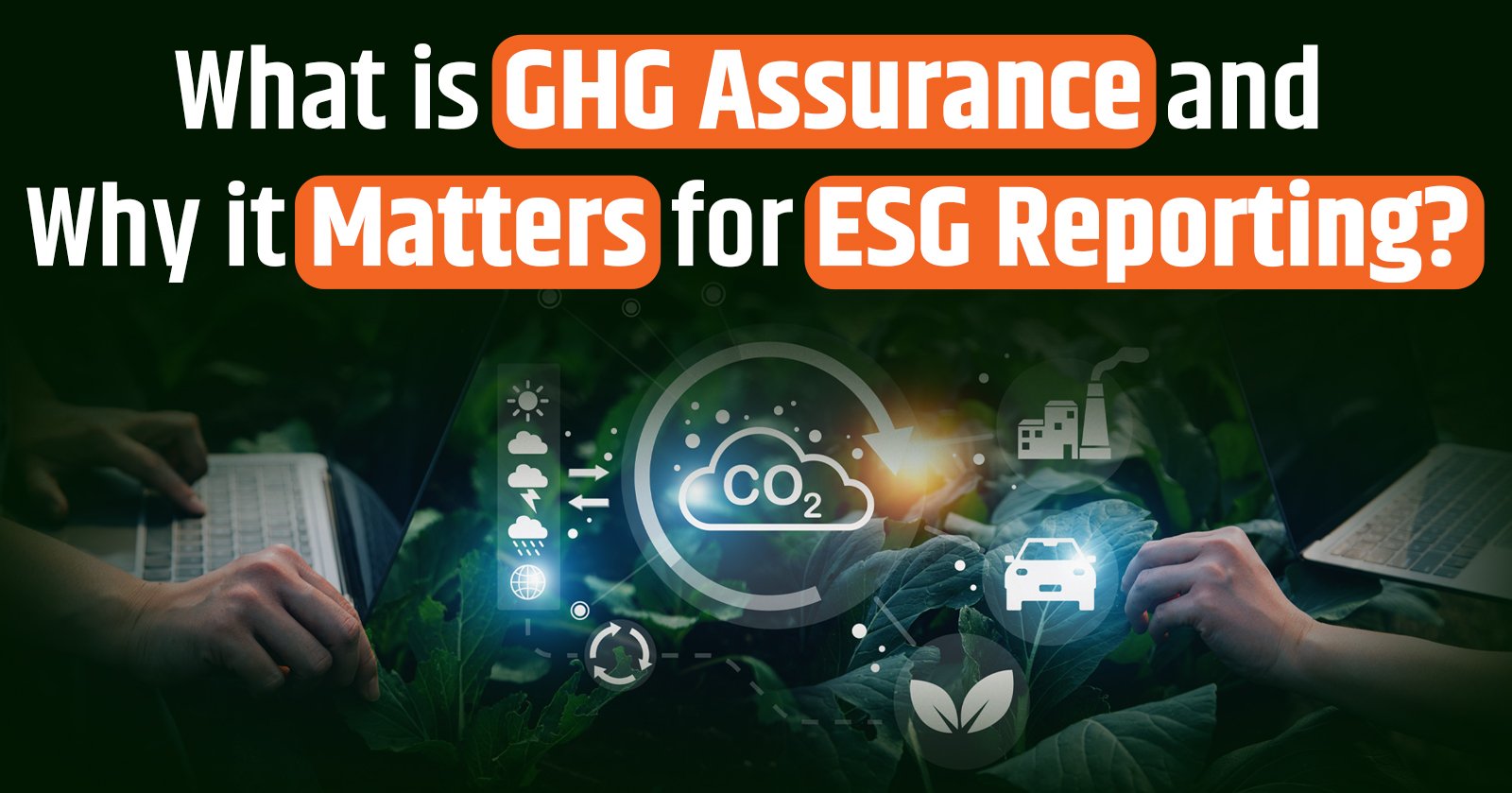
What Is GHG Assurance and Why Does It Matter for ESG Reporting?
Sustainability & tracking, reporting greenhouse gas emissions has now become a mandatory step in every Corporate Office. The data that is being provided in the ESG report should be accurate and verified. Here, a company needs GHG assurance.
GHG assurance means an unrestricted review of a Company’s emissions data for reliability & transparency. In ESG (Environmental, Social, & Governance) reporting, it builds up trust, ensures compliance with the global standards, and shows that a Company’s climate actions are genuine & backed by verified information.
What Is GHG Assurance?
GHG Assurance is checking an enterprise’s greenhouse gas emissions data to make sure that the data provided is accurate and trustworthy. It involves an independent review of the data, methods, and processes used to measure emissions, ensuring they follow recognised standards like the Greenhouse Gas Protocol or other regulatory guidelines.
What is Greenhouse Gas (GHG) Emissions Assessment?
A Greenhouse Gas (GHG) Emissions Assessment is the procedure of finding out the amount of greenhouse gas an organisation produces. It involves identifying, measuring, and reporting both Direct & Indirect emissions, to understand the Company’s overall carbon footprint & support global climate goals.
GHG emissions are divided into three types:
Scope 1: Sources owned or controlled by the company (like fuel use or company vehicles) are Direct emissions.
Scope 2: Indirect emissions from the electricity, steam, heating, or cooling the company buys.
Scope 3: Other indirect emissions from the value chain (like purchased goods, transport, waste, or employee commuting).
This assessment follows international standards such as the Greenhouse Gas Protocol and ISO 14064. It helps companies track emissions, find key problem areas, and plan effective climate actions.
Benefits of GHG Statement Assurance
The benefits of GHG Assurances are as follows:
- Identify risks and opportunities.
- Stakeholder expectations are fulfilled.
- Gain a competitive edge.
- Improve data reliability.
- Build investor trust.
- Avoid penalties and losses.
What is the Purpose of GHG Assurance?
The purpose of GHG Assurance is to provide an independent third-party greenhouse gas verification to check the overall carbon emissions of the Company. This procedure builds trust with the Investors by showing transparency, supporting regulatory compliance, and validating an organisation’s environmental performance and commitment to managing the carbon footprint. The organisations identify the inefficiencies or loopholes in their carbon footprint data tracking and reduction efforts.
Key Purposes are as follows:
- Enhance the credibility & transparency.
- Ensure Regulatory Compliance
- Improve Operational Efficiency
- Support Investor Confidence
- Strengthen Brand Reputation
- Facilitate Comparability
Who needs it?
GHG Assurance and greenhouse gas verification are essential for industries with significant environmental footprints, such as manufacturing, energy, cement, steel, FMCG, and logistics. Companies of all sizes, especially medium to large enterprises, require emissions audits to ensure accuracy in carbon disclosure and transparency in ESG reporting. These processes help businesses meet regulatory requirements, build investor confidence, and strengthen their sustainability credentials by validating reported emissions and aligning with global climate accountability standards.
Regulatory context of GHG Assurance
The regulatory landscape for GHG Assurance and ESG reporting is tightening globally. Frameworks like the EU’s Corporate Sustainability Reporting Directive (CSRD), the U.S. SEC climate disclosure rules, and the ISSB standards emphasise accurate greenhouse gas verification, emissions audits, and transparent carbon disclosure. These regulations require companies to validate their environmental data through independent assurance, ensuring consistency, reliability, and comparability in sustainability reporting across markets, while reinforcing accountability in corporate climate performance.
How does it link to the broader ESG strategy?
GHG Assurance plays a crucial role in strengthening a company’s broader ESG strategy by ensuring the accuracy and reliability of environmental data. Through greenhouse gas verification and emissions audits, organisations can build trust and transparency in their ESG reporting and carbon disclosure. Reliable assurance not only enhances investor confidence but also supports strategic decision-making, helping businesses identify emission reduction opportunities, align with sustainability goals, and demonstrate a genuine commitment to climate responsibility and long-term value creation.
Takeaway
GHG Assurance, greenhouse gas verification, and emissions audits are no longer optional; they are strategic necessities. By ensuring transparency and accuracy in ESG reporting and carbon disclosure, organisations can enhance credibility, meet global regulatory requirements, and strengthen their overall ESG strategy. Reliable assurance builds investor trust, supports data-driven sustainability action, and demonstrates a company’s true commitment to climate responsibility.