How AI and Digital Tools Are Transforming GHG Assurance
People are focusing on sustainability by evolving themselves, AI in Greenhouse Gases (GHG)
has now become a game-changer for companies that are trying to reduce their carbon footprint accurately. As we know, the traditional ways of any procedure are typical and time-consuming, but now in this digital era, the procedures have been cut short from 10 to 3 steps. Now, with the digital emissions tracking & ESG Software, the process has been streamlined, through which the organisations can easily make informed, timely decisions about sustainability efforts.
AI Use Cases in Data Collection and Analysis
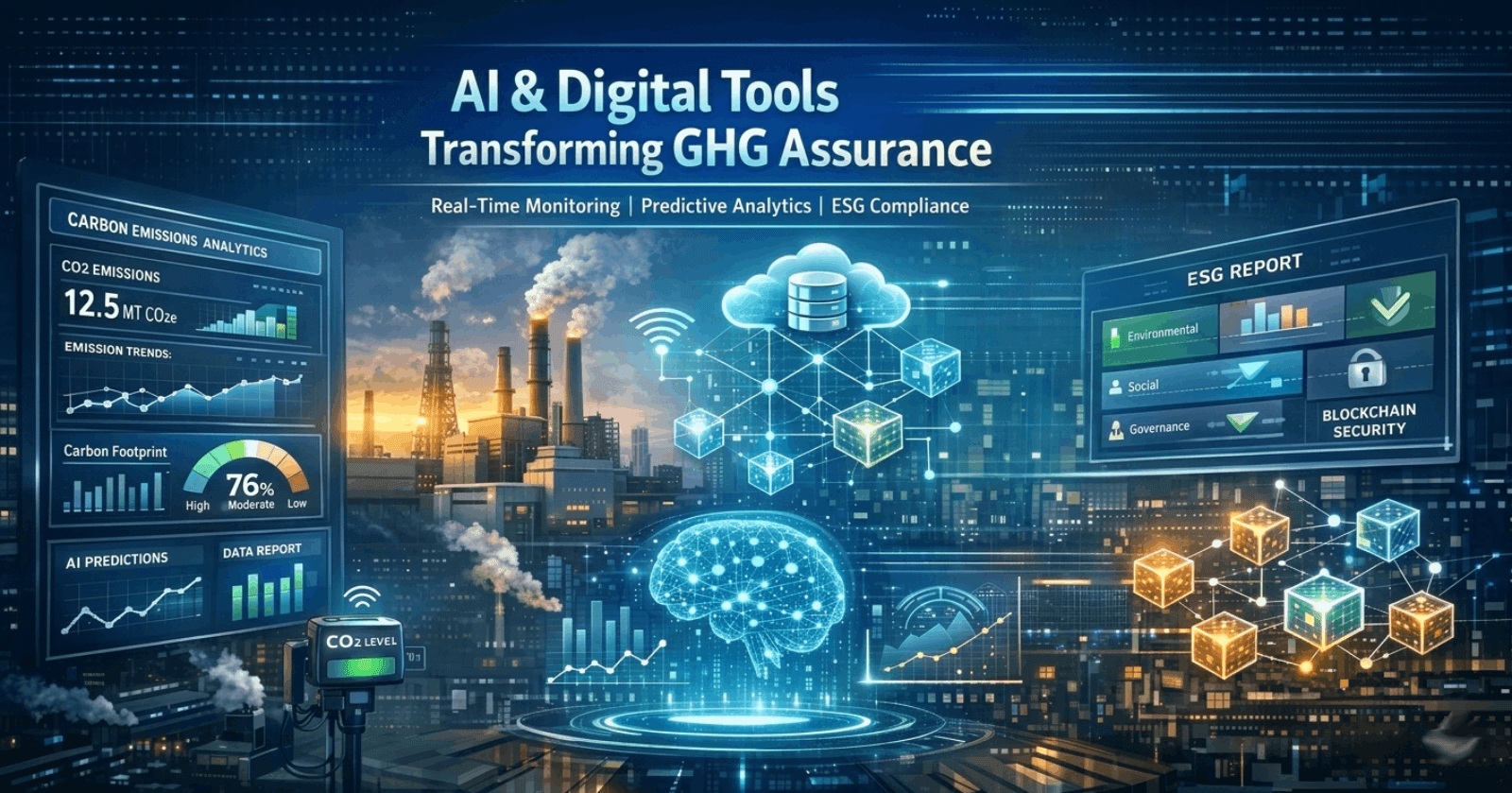
The importance of the application of AI in GHG assurance is in data collection and analysis. AI-powered platforms can automatically gather the carbon data from multiple source chains, which include the supply chains, transportation, and industrial operations, reducing human error & saving time. The machine learning algorithms can detect unusual, identify trends, and mark inconsistencies in carbon reporting, which strengthens the accuracy and reliability of carbon data management.
Moreover, the automated verification using AI can cross-check the reported emissions against historical trends or benchmark data, enabling faster the data is more accurate environmental claims. Leading ESG software platforms now integrate these capabilities, providing a unified dashboard for organisations to monitor and validate their emissions in real-time.
Benefits of AI and Digital Emissions Tracking
The adoption of digital emissions tracking and AI-driven tools have several benefits:
- Speed – AI speeds up data collection, processing, and reporting, reducing the time required for annual or quarterly GHG assurance.
- Accuracy – The accuracy rate is higher since it minimises human errors, ensuring more reliable carbon reporting.
- Traceability – AI platforms maintain comprehensive audit trails, making it easier for regulators and auditors to verify GHG claims.
- Scalability – Organisations can efficiently monitor emissions across multiple sites and geographies.
By integrating AI into GHG assurance, companies not only ensure compliance but also gain actionable insights that drive carbon-reduction strategies.
What are ESG Softwares?
ESG softwares is basically a digital platform through which organisations check their ESG performance & data of the Report. The ESG Software’s role is to make the procedure easier and accessible. Everything gets almost automated: the data collection, analysis, and reporting. It’s easier to keep track of the sustainability efforts and growing regulations.
Overview Of Leading ESG Tools & Platforms
There are many ESG Software platforms that organisations use, and now that incorporate AI in order to optimise GHG assurance:
Workday: This platform allows the Firm to manage its cloud platform, which includes the ESG Reporting capabilities, which are within its financial & HR Solutions.
Workiva: This is a Global Platform which provides a cloud-based platform to connect the reporting & compliance, including tools for ESG Reporting. This software focuses on maintaining the data, managing it, and reporting the ESG data of a Company. It supports various reporting frameworks & standards.
Novata: It focuses on Sustainability Software for Private markets, which offers a framework builder that helps enterprises determine what ESG data should be collected. The ESG Software platform gives access to all the commonly used frameworks and widely used metrics, simplifying the process of ESG data collection & reporting. This ESG Software simultaneously provides the procedure of data visualisation tools to focus on the critical ESG insights & flexible reporting options.
These tools are setting new industry standards for automated verification and transparency, making ESG reporting more reliable than ever.
Risk & Limitations Of Automation
While AI brings numerous benefits, there are challenges to consider:
- Data Quality – AI relies on accurate input data; poor-quality data can lead to incorrect insights.
- System Bias – Algorithms may inadvertently prioritise specific metrics or sources over others.
- Cybersecurity – Digital tools increase exposure to data breaches or manipulation.
Despite these risks, integrating AI into GHG assurance remains highly valuable when paired with human oversight and robust data governance.
Future Outlook
The future of sustainability reporting is digital. Combining AI with digital emissions tracking and ESG software will enable organisations to achieve faster, more transparent, and more accurate GHG assurance. Automated verification will continue to improve, allowing real-time carbon audits and predictive insights for climate action. Companies that embrace these technologies today will not only streamline compliance but also enhance their credibility and competitive advantage in the ESG landscape.
TakeAway
AI and digital tools are redefining how organisations approach GHG assurance. From improving speed and accuracy in carbon data management to enabling comprehensive automated verification, the synergy of AI and ESG software is shaping a future where sustainability is both measurable and actionable.
Frequently Asked Questions
How does digital emissions tracking work?
Digital emissions tracking uses sensors, IoT devices, and AI algorithms to collect and monitor carbon emissions data in real-time. It eliminates manual data entry, improves transparency, and ensures faster reporting, making GHG assurance more efficient and traceable.
How does automated verification improve sustainability reporting?
Automated verification uses AI to cross-check reported emissions against historical data and benchmarks, ensuring higher reliability and transparency. This process significantly reduces manual intervention, enhances GHG assurance, and accelerates ESG audits.
What role does carbon data management play in ESG reporting?
Carbon data management is the foundation of accurate ESG reporting. It involves collecting, organising, and analysing emissions data to help companies identify reduction opportunities and track progress toward sustainability goals. AI-driven carbon data management systems improve precision and traceability in the reporting process.
How can companies get started with AI in GHG assurance?
Organisations can begin by adopting ESG software platforms that support AI-based carbon data management and automated verification. Partnering with experienced ESG consultants ensures proper framework alignment, data validation, and seamless integration of digital tools into their sustainability workflow.
How does automated verification improve sustainability reporting?
Automated verification uses AI to cross-check reported emissions against historical data and benchmarks, ensuring higher reliability and transparency. This process significantly reduces manual intervention, enhances GHG assurance, and accelerates ESG audits.