Why GHG Assurance Will Be Mandatory Under Global ESG Regulations
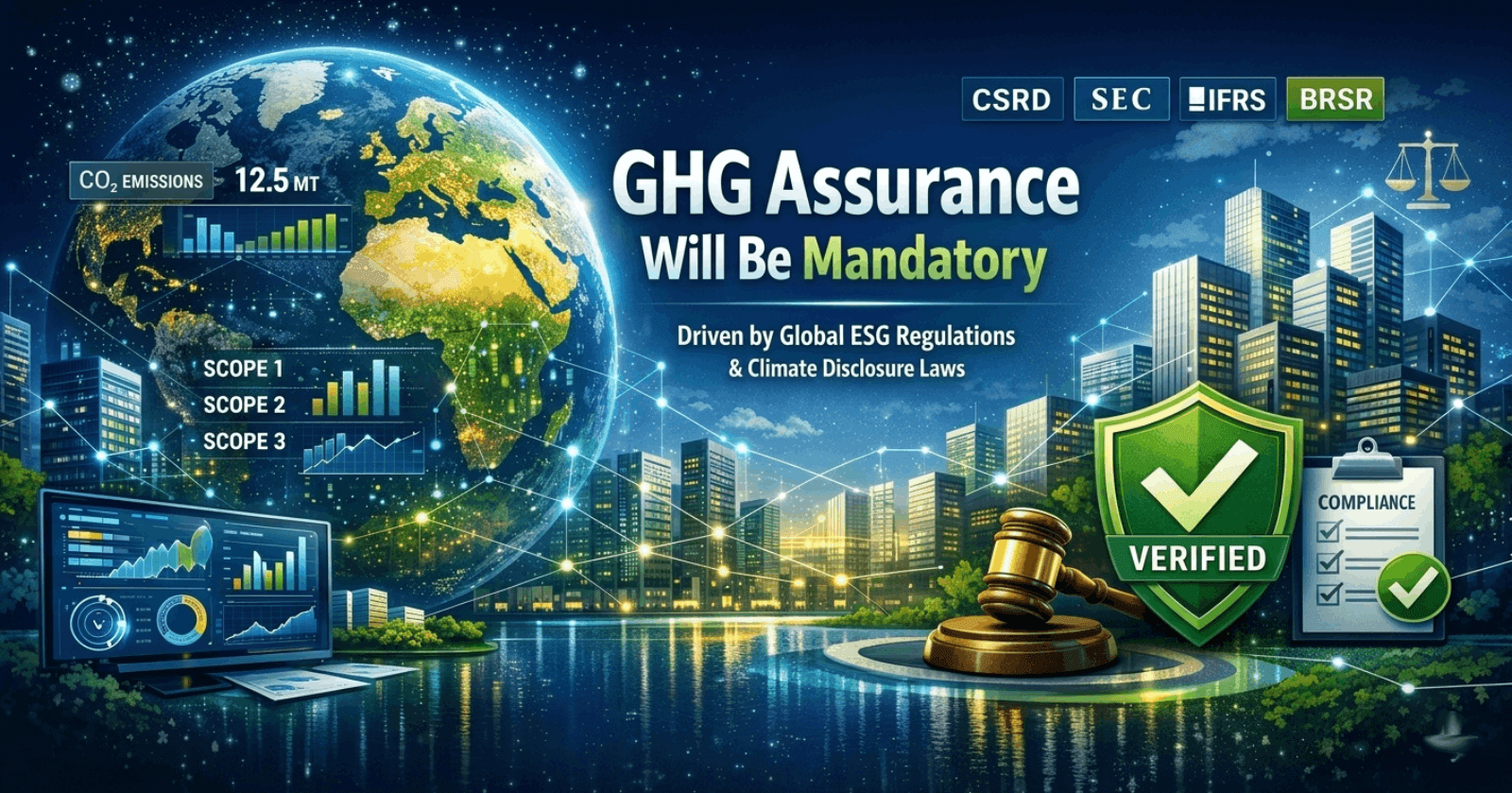
With the rise of global sustainability standards, GHG assurance regulations are becoming a critical part of corporate reporting. New GHG assurance regulations like CSRD, SEC climate rules, and ISSB guidelines will require many organizations to report their greenhouse gas emissions.
These rules help make reporting clear, ensure ESG compliance, and keep companies responsible for their environmental impact.
Companies should know the rules, deadlines, penalties, and the difference between limited and reasonable assurance. Getting ready in advance helps them follow the rules, manage risks, cut emissions, and earn investor trust.
GHG assurance will soon be mandatory under global ESG regulations, making accurate measurement and verification of emissions important for every responsible business.
What Is GHG Assurance?
GHG assurance checks a company’s greenhouse gas emissions to make sure the data is accurate and complete. It helps businesses follow GHG assurance regulations, stay ESG compliant, build stakeholder trust, and meet international standards like the GHG Protocol.
With accurate GHG verification, companies can share clear emission reports, take responsibility for their impact, and identify ways to reduce emissions to fight climate change.
As sustainability gains focus, reliable GHG assurance is key for good environmental management and reporting.
Greenhouse Gas Emissions
Greenhouse gases (GHGs) trap heat in the atmosphere, which leads to global warming. The important gases are carbon dioxide, methane, nitrous oxide, and fluorinated gases, mostly released by human activities such as fossil fuel use, deforestation, and industrial processes.
Measuring and reporting GHG emissions accurately is important to understand their environmental impact and plan reductions. These emissions raise global temperatures, affecting ecosystems, weather, and human health. Monitoring and managing GHG emissions is key to fighting climate change and supporting sustainable development.
Why GHG Data Assurance Matters for Businesses Today
As climate change concerns grow and new GHG Assurance Regulations take effect, companies are now under pressure to verify and report their greenhouse gas emissions accurately.
In regions like the UK and EU, mandatory reporting requires large organizations to share their direct and indirect emissions, including those from their supply chains. This also pushes small and medium businesses to keep reliable and verified GHG data to stay compliant and competitive.
Accurate and independent GHG assurance supports ESG compliance, builds trust with stakeholders, improves decision-making, and prepares businesses for future regulatory changes.
Build Stakeholder Trust: Many investors, lenders, and partners now ask for verified GHG data to assess sustainability performance.Independent assurance boosts confidence that your emissions reporting follows best practices. It also improves your reputation and gives an edge when working with large companies and investors focused on sustainability.
Make Smarter Business Decisions: Accurate and verified GHG data isn’t just for compliance, it also helps companies make better decisions. Reliable data supports risk management, saves costs, and strengthens sustainability planning. With it, businesses can find ways to reduce emissions, work more efficiently, and track progress toward net-zero goals.
Get Ready for Future Regulations: The regulatory landscape is changing fast. The EU has already made GHG data assurance part of its mandatory reporting framework, and the UK is expected to follow by 2025.
Getting assurance now helps companies adapt early, lower future compliance costs, and ensure smooth ESG compliance under upcoming GHG Assurance Regulations.
Proactive GHG assurance not only ensures compliance, it also helps businesses build credibility, manage climate risks, and stay ready for a sustainable future.
GHG Assurance Regulations
A new sustainability assurance framework will cover all types of sustainability information, including greenhouse gas emissions. The International Auditing and Assurance Standards Board (IAASB) will retire its old GHG assurance standard, ISAE 3410, and introduce the International Standard on Sustainability Assurance (ISSA) 5000. This new standard takes effect on 15 December 2026.
ISSA 5000 provides a principles-based approach to improve the reliability and transparency of sustainability reporting. It aims to boost the credibility of information, meeting the growing demand for verified data from investors, regulators, and other stakeholders.
The framework is flexible for global and local reporting, and compatible with rules like the EU’s Corporate Sustainability Reporting Directive (CSRD). It applies to organizations of all sizes and to all types of assurance providers.
The standard includes key ideas like materiality and proportionality. The IAASB updated some rules in April 2025 to follow the IESBA Code of Ethics, covering areas like using external experts in audits and assurance.
The IAASB and IESBA are collaborating to improve trust, transparency, and consistency in sustainability reporting, creating global standards for the future.
Why Choose Sustrack for GHG Assurance?
Sustrack helps businesses navigate the evolving landscape of GHG Assurance Regulations, ESG compliance, and mandatory reporting under frameworks like CSRD, SEC climate rules, and ISSB standards. Our expertise ensures your greenhouse gas emissions data is accurate and independently verified, which makes your sustainability reporting attractive.
Frequently Asked Questions
What is ESG compliance and why is it important?
ESG compliance means following environmental, social, and governance standards in business operations. Accurate GHG assurance helps companies follow ESG rules, verify emissions data, build investor trust, and meet global sustainability standards.
What are CSRD and SEC climate rules?
Companies must report their environmental and climate data under the CSRD in the EU and SEC climate rules in the US. Verified GHG assurance ensures your reporting is accurate and fulfills mandatory reporting requirements.
What is the ISSB and how does it affect companies?
The ISSB sets global sustainability reporting standards. Companies that follow ISSB guidelines get consistent, verified GHG data, helping them stay compliant, transparent, and trusted by stakeholders.
What is mandatory reporting of greenhouse gas emissions?
Mandatory reporting means companies must share their direct and indirect GHG emissions, including those from supply chains. Verified GHG assurance makes sure this reporting is accurate, reliable, and meets international standards.