Integrating ESG Risk Management into Board Governance
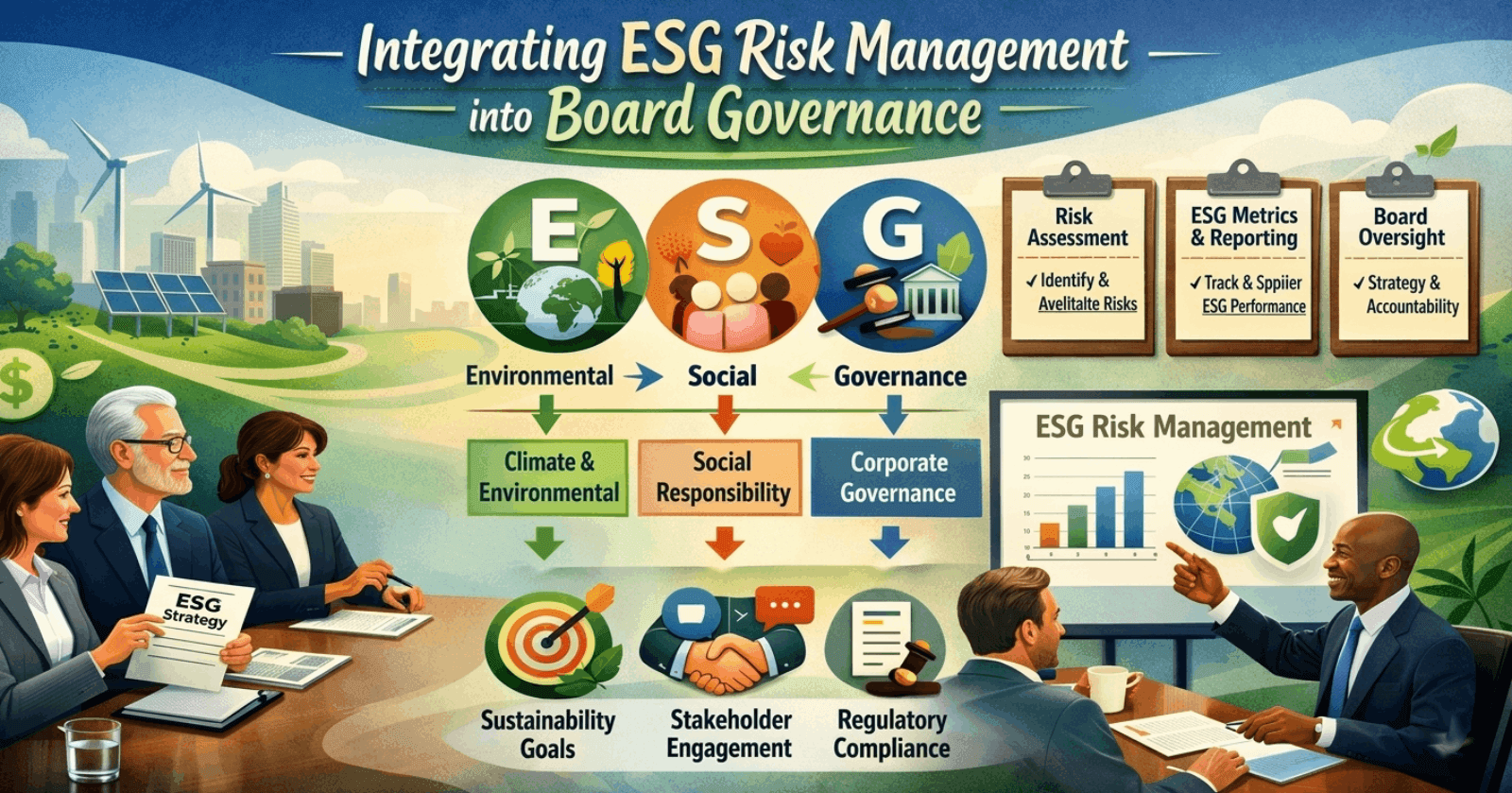
ESG risk management focuses on both internal and external risks that can affect a business. When environmental, social, and governance (ESG) factors are included in the enterprise risk management (ERM) process, organisations become stronger and more sustainable.
As stakeholders now value long-term sustainability over short-term profits, this approach helps reduce major risks. By implementing ESG into ERM processes and governance structures, companies can manage ESG risks at the right strategic level.
When ESG risk management is part of board governance, organizations can make better decisions, manage risks early, and grow sustainably.
What is ESG Risk Management?
ESG risk management helps in identifying and managing environmental, social, and governance risks within a company existing risk framework. ESG risks are not a separate category of risk. Instead, they affect many different types of risks across the business.
This is why sustainability risks should be included under existing risk types and properly integrated into the overall risk management system. Companies may also need to update their risk management processes to address these risks effectively.
ESG Risks as Strategic and Financial Risks
ESG risks can directly impact a company’s business strategy and finances. Environmental issues like climate change or rising energy costs can increase expenses and disrupt operations.
Social risks such as employee safety, labor practices, and community relations can affect productivity and brand image. Governance risks, including weak controls or non-compliance, can lead to fines and loss of trust.
When companies treat ESG risks as strategic and financial risks, they include them in important business decisions. Managing these risks early helps reduce losses, control costs, and support stable, long-term growth.
Why Are ESG Risks Important in Risk Management?
ESG risks can affect a company’s business, finances, and reputation. By including ESG risks in risk management, companies can identify problems early and reduce their impact.
Understanding ESG risks helps businesses see how future operations may be affected and what changes are needed in risk planning. Companies that give importance to ESG risk management are more likely to achieve long-term stability and sustainable growth.
Strategies for Integrating ESG into Governance
Integrating ESG into governance requires clear ESG governance and strong board oversight. When leadership takes responsibility, ESG becomes part of everyday decision-making rather than a separate activity.
Set Clear ESG Frameworks : Companies should make simple ESG policies and procedures so environmental, social, and governance issues can be handled easily.
By setting a clear ESG goals and targets helps to track progress and improve accountability. Regular ESG reporting and disclosure also builds trust with potential investors, regulators, and other stakeholders.
Embed ESG into Business Strategy : ESG should be included in overall business planning and risk management. For making long term decisions, company should align ESG goals with the company strategy that ensures sustainability in long-term.
Strong board oversight and leadership commitment are important to guide ESG goals, allocate resources, and monitor performance. ESG should also be integrated across various departments such as finance, operations, and HR.
Build a Culture of Responsibility : A strong ESG culture starts with employee interest and involvement. Training and engagement help employees to understand their role in ESG goals.
By linking incentives and rewards to ESG performance, which encourages responsible behaviour. A transparent communication about ESG actions and results helps in building trust and supports effective ESG governance.
Role of ESG Consultants in Risk Assessments
Choosing the best ESG consultants is important for risk assessments. If you are looking best ESG consultants, choose Sustrack. ESG consultants play an important role in risk assessments.
They follow a structured strategy that helps them to identify risk. By using frameworks and tools, they identify how ESG risk can affect business operations, finances, and brand reputation.
ESG consultants help organizations include ESG risks in their risk management, follow regulations, and report their ESG performance clearly.
They also advise boards and leadership on ESG strategies, enhancing board oversight and overall ESG governance. This helps companies to manage risks better and achieve long-term sustainable growth.
Why Choose Sustrack for ESG Risk Management and Board Oversight?
For long-term growth and sustainability, managing ESG risks is important. Sustrack helps companies include environmental, social, and governance factors into their risk management and board decisions.
Our expert ESG consultants identify risks, assess their impact, and guide organizations to improve board oversight and ESG governance. We also help with transparent reporting and integrating ESG into business strategy.
We provide various services such as ESG Consultancy, Reporting Frameworks, ESG Assurance & Ratings, Carbon Accounting Services, and more.
Frequently Asked Questions
How do ESG risks affect a company’s financial and strategic decisions?
Environmental issues, social risks, and governance challenges can disrupt business operations, increase costs, and create legal or reputational problems.
Why are ESG risks important for businesses?
ESG risks can impact a company’s strategy, finances, and brand image. Managing these risks early helps reduce losses, control costs, and support long-term sustainable growth.
How can ESG be integrated into board governance?
Companies can integrate ESG into board governance by setting clear policies, establishing ESG goals, ensuring strong board oversight, embedding ESG into corporate strategy, and building a culture of responsibility across all departments.
What is the role of ESG consultants in risk assessments?
ESG consultants help organizations identify, assess, and manage ESG risks. They guide boards and leadership, improve ESG governance, ensure compliance with regulations, and support transparent reporting.