Anti-Bribery Policies and Fair Competition in ESG Compliance
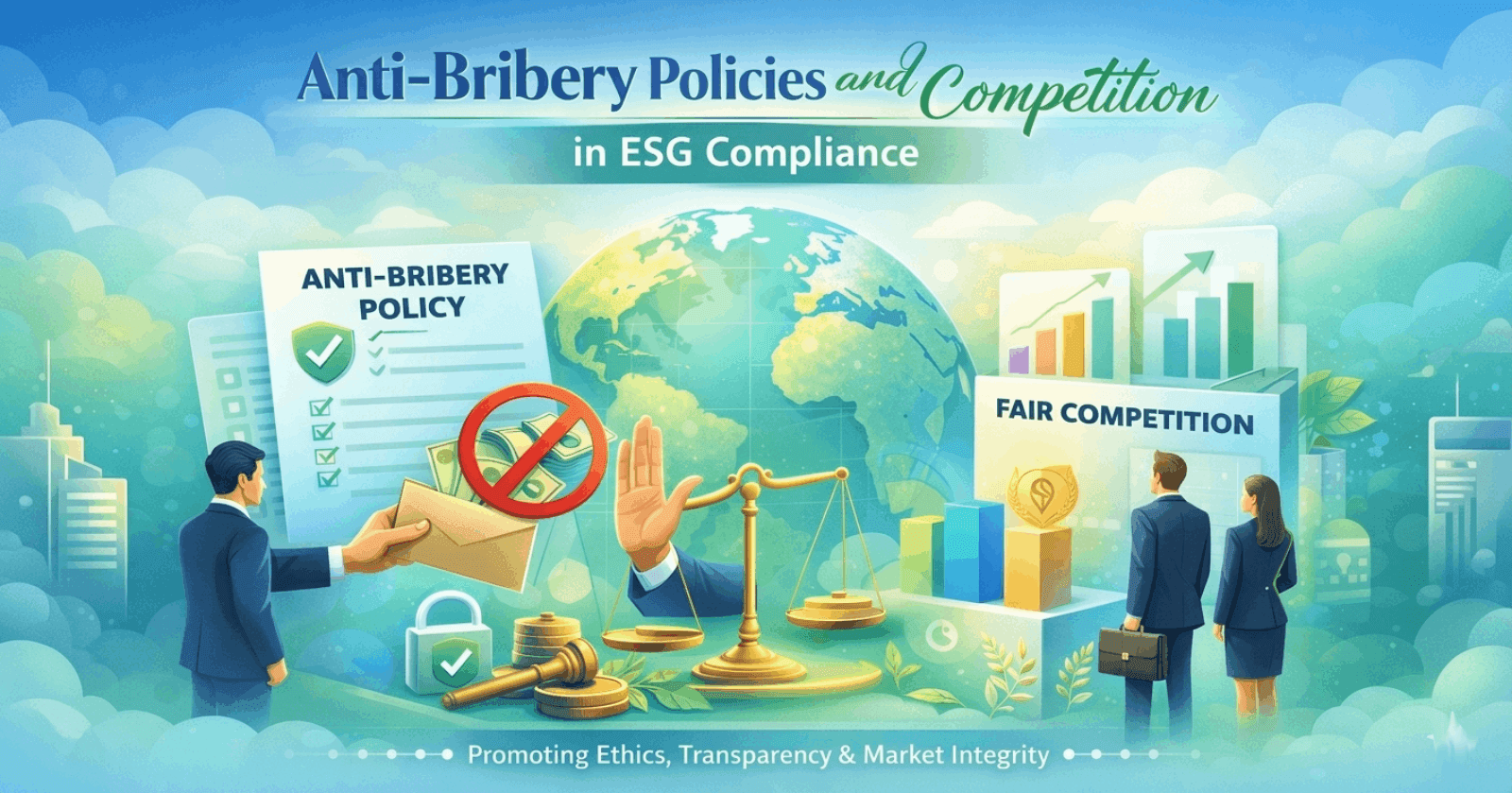
One unethical decision can break years of trust. Nowadays, strong ESG compliance is important for long-term growth and credibility. Companies are now expected to operate honestly, transparently, and responsibly.
With Sustrack’s ESG consultancy services, organizations can use effective reporting frameworks and carbon market services to improve governance. Having a clear anti-bribery policy and promoting fair competition are important to good ESG compliance. These steps help businesses prevent corruption, stay ethical, and build trust with investors, customers, and regulators.
A clear anti-bribery policy and a commitment to fair competition are core parts of effective ESG governance. These practices help businesses to prevent corruption, follow ethical standards, and build trust with investors, customers, and regulators.
By following an effective compliance policy, organizations can reduce legal risks, protect their reputation, and create a culture of integrity.
What Is Anti-Bribery Policy?
An anti-bribery policy is a formal guideline that clearly states a company’s commitment to preventing bribery and corruption in all its business activities. It prohibits employees, management, and third parties from offering, giving, accepting, or requesting bribes to gain unfair advantages.
By promoting ethical behavior and fair competition, the policy helps reduce legal and reputational risks, supports a strong compliance policy, and strengthens overall ESG governance within the organization.
Understanding Bribery Risks and Governance Failures
Bribery is a major threat for effective ESG governance. Weak internal controls, a lack of responsibility, and insufficient supervision can all contribute to governance failures, leading organisations to financial penalties and reputational damage.
Employees and management can face ethical difficulties in the absence of a well defined compliance policy, increasing the possibility of corruption, conflicts of interest, and unfair business practices. Implementing a well-documented anti-bribery strategy helps to set clear norms, promote ethical decision-making, and promote fair competition throughout all business processes.
Third-Party and Supply Chain Risks
Third-party relationships often carry the highest bribery risks in ESG compliance. Vendors, contractors, distributors, and suppliers may follow unethical practices that can affect a company’s governance. Even if the wrongdoing happens outside the company, the business can still be held responsible.
To reduce these risks, businesses should carefully check their supply chain partners and make sure they follow the company’s anti-bribery policy and fair competition rules. Clear contracts, regular supplier checks, and transparent purchasing processes help prevent corruption and strengthen ESG governance.
Training and Enforcement Frameworks
Policies are not enough. Strong ESG compliance needs regular training and strict enforcement. Employees must be trained to understand bribery risks, fair competition rules, and ethical behavior.
Clear reporting systems, whistleblower protection, and fair disciplinary actions are key parts of an effective compliance policy. When leaders enforce these rules consistently, it builds honesty, accountability, and supports long-term ESG goals.
Why Anti-Bribery and Fair Competition Matter in ESG?
Strong governance builds trust with investors, customers, and regulators. Companies that follow clear anti-bribery policies, transparent compliance systems, and fair competition practices protect their reputation and support sustainable business growth while meeting ESG standards.
Why Choose Sustrack for Ethical and Transparent ESG Governance?
At Sustrack, we help businesses to build strong ESG governance through clear anti-bribery policies, fair competition practices, and effective compliance frameworks. Our approach ensures that your organization operates transparently, reduces legal and reputational risks, and builds long term trust with investors, customers, and regulators.
With Sustrack, you get guidance on identifying bribery risks, managing third-party and supply chain challenges, and implementing training and enforcement systems that promote integrity and accountability.
Conclusion
Anti-bribery policy and fair competition are important pillars of strong ESG governance. By identifying bribery risks, managing third-party and supply chain challenges, and implementing effective training and enforcement frameworks, organizations can build ethical, transparent, and accountable operations.
A strong compliance policy not only reduces legal and reputational risks but also strengthens stakeholder trust and supports long-term, sustainable business growth.
Frequently Asked Questions
What is an anti-bribery policy?
An anti-bribery policy is a guideline that stops employees, management, and partners from giving, taking, or asking for bribes. It promotes fair business practices, reduces legal risks, and supports strong ESG governance.
How can companies identify bribery risks?
Bribery risks can be identified through regular audits, risk assessments, employee interviews, and monitoring third-party relationships such as vendors, suppliers, and contractors.
How does Sustrack help with ESG governance?
Sustrack provides guidance on creating anti-bribery policies, managing third-party risks, implementing compliance frameworks, and conducting training programs. This ensures businesses operate transparently, ethically, and sustainably.
What are the benefits of a strong compliance policy?
A strong compliance policy reduces legal and reputational risks, promotes ethical business practices, ensures fair competition, and builds trust with investors, customers, and regulators.