Embedding Ethical Practices into ESG Governance Frameworks
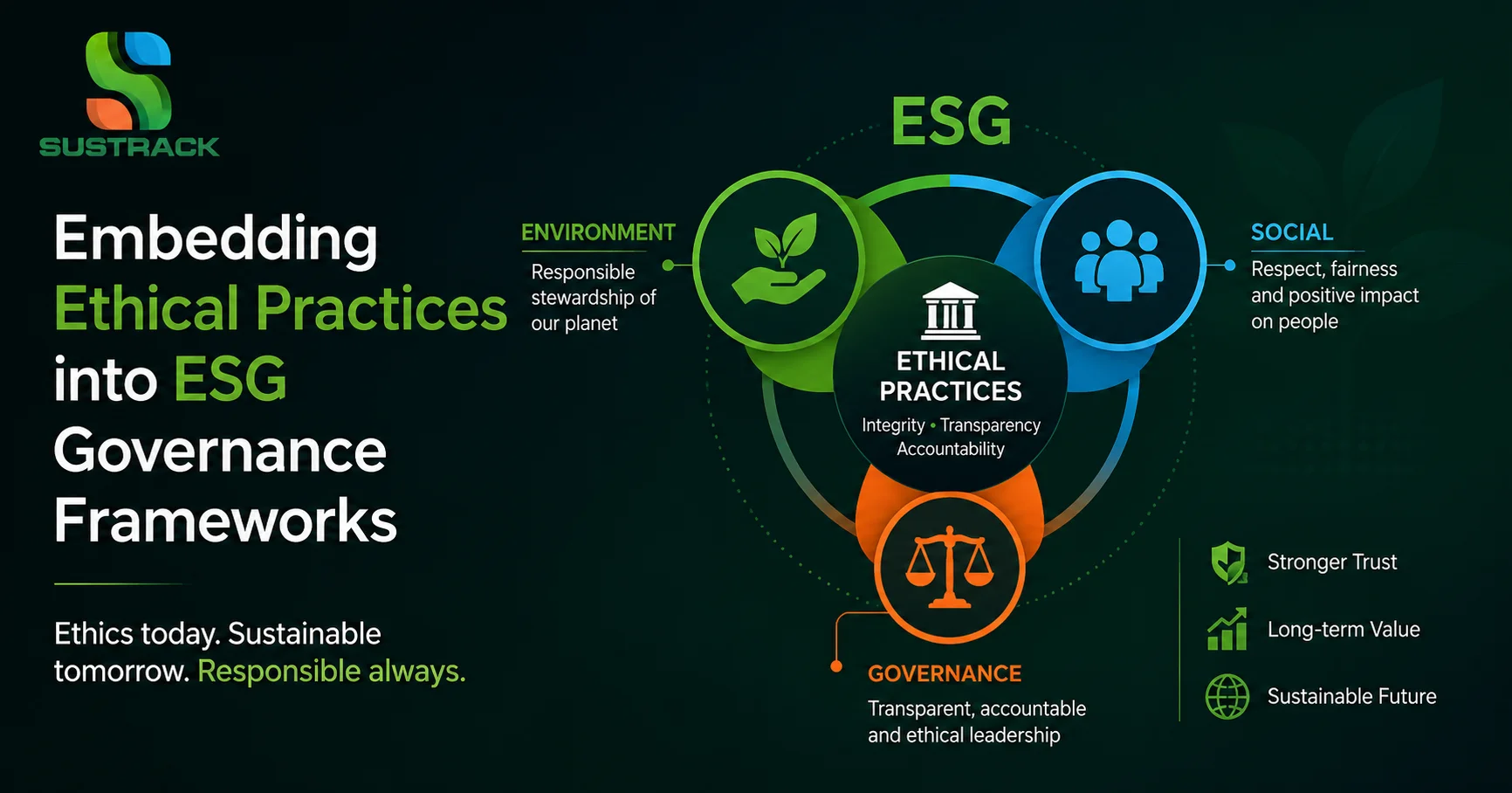
Ethical practices play an important role in building strong ESG governance frameworks for modern businesses. As companies focus more on sustainability and responsibility, embedding ethical practices into ESG helps ensure fair decisions, transparency, and accountability. When ethics are integrating in daily operations and leadership actions, ESG efforts become more effective and trustworthy.
What Is Corporate Ethics?
Corporate ethics involves following moral principles and doing the right thing in business. It is not enough to simply observe the law; it is also important to be honest, fair, and accountable in everyday activities. Ethical businesses care about their employees, customers, and society while aiming for growth and profit.
Corporate ethics became important in the 1960s as people started expecting businesses to take responsibility for environmental protection, social issues, and fair governance. It has expanded to incorporate transparency, corporate social responsibility (CSR), and responsible use of technology.
Challenges and Barriers to Integrating ESG with Corporate Governance
Integrating ESG with corporate governance provides several kinds of problems that may impact ethical decision-making across organisations.
Lack of awareness and internal resistance: Many employees and management do not completely comprehend ESG or the importance of ethical standards, which prevents integration.
Weak ESG knowledge across teams: Without proper training, corporate ethics and ESG goals are not followed consistently in daily operations.
Complex ESG data and reporting: Collecting and managing ESG data is difficult, making transparency and ethical reporting a challenge.
Changing ESG regulations: Frequent regulatory updates require constant monitoring and strong governance systems.
High initial costs: ESG initiatives may need upfront investment, even though they support long-term value and a strong ESG culture.
Short-term mindset: Focusing only on immediate profits can delay ESG adoption, despite its long-term benefits.
Why ESG Is Important for Corporate Governance?
ESG plays an important role in corporate governance by helping companies follow ethical practices, build trust, and grow responsibly. When ESG is part of governance, businesses create strong corporate ethics and a positive ESG culture across the organization.
Better Risk Management : hanges in regulations, environmental concerns, and social expectations all present risks to businesses. Integrating ESG and ethical principles into governance allows for early identification of risks and reduction of their impact. Strong corporate ethics help to protect the company’s reputation.
Better Decision-Making : Stakeholders want transparency and moral behaviour. A strong ESG culture motivates leaders to make responsible and environmentally friendly decisions. When corporate ethics inform governance, ethical behaviours are embedded in daily company decisions.
Long-Term Sustainability : Long-term success depends on efficient resource use and cost control. ESG-driven ethical practices improve efficiency, reduce waste, and support stable growth. A strong ESG culture helps businesses adapt to future challenges.
Higher Investor Confidence : Investors prefer companies with clear corporate ethics and strong ESG commitments. Embedding ethical practices into governance builds trust and shows long-term responsibility. This strengthens the company’s ESG culture and attracts sustainable investors.
Why ESG Matters in Corporate Governance?
ESG plays an important role in corporate governance by helping companies follow ethical practices, build trust, and grow responsibly. When ESG is part of governance, businesses create strong corporate ethics and a positive ESG culture across the organization.
Better Risk Management : Companies face risks from new laws, environmental changes, and social pressures. Adding ESG and ethical practices to governance helps spot risks early and reduce their impact. Strong corporate ethics also protect the company’s reputation.
Better Decision-Making : Stakeholders want transparency and responsible actions. A strong ESG culture helps leaders make fair, sustainable decisions. When corporate ethics guide governance, ethical practices are followed in daily business.
Long-Term Sustainability : Long-term success comes from using resources efficiently and controlling costs. Ethical practices in ESG improve efficiency, reduce waste, and support steady growth. A strong ESG culture helps businesses handle future challenges.
Higher Investor Confidence : Investors trust companies that follow strong corporate ethics and have clear ESG commitments. Using ethical practices in governance builds confidence, shows long-term responsibility, and creates a strong ESG culture that attracts responsible investors.
Why Choose Sustrack for Ethical ESG Governance?
Sustrack helps companies in keeping to moral standards while creating strong corporate ethics as part of their ESG strategy. We make ESG easy to understand and integrate into daily operations and leadership choices.
Our strategy focuses on establishing a clear governance framework that converts ESG policies into practical actions. Sustrack enables firms to create a strong ESG culture, improve transparency, and promote long-term, responsible growth.
Our team guides companies in implementing governance practices according to frameworks such as GRI, CBAM, and CDP, helping boards stay compliant, improve reporting, and earn investor trust.
Wrapping Up
Embedding ethical practices into the ESG governance framework helps businesses operate responsibly and build long-term trust. Strong corporate ethics ensure fairness, transparency, and accountability in everyday decisions. When leaders set the right example, and policies are followed in practice, organizations develop a strong ESG culture.
Despite challenges, companies that focus on ethics within governance are better prepared for future risks, investor expectations, and sustainable growth. Ethical ESG governance is essential for long-term business success.
Frequently Asked Questions
What are ethical practices in business?
Ethical practices are actions that ensure honesty, fairness, and responsibility in business operations and decision-making.
What is corporate ethics?
Corporate ethics refers to the moral values and standards that guide how a company operates and treats its stakeholders.
How can companies build a strong ESG culture?
Companies can build a strong ESG culture through leadership involvement, employee training, and aligning ESG goals with daily operations.
Why is a governance framework important for ESG?
It ensures accountability, transparency, and effective implementation of ESG and ethical practices.