BRSR Reporting in India: Complete Compliance Guide
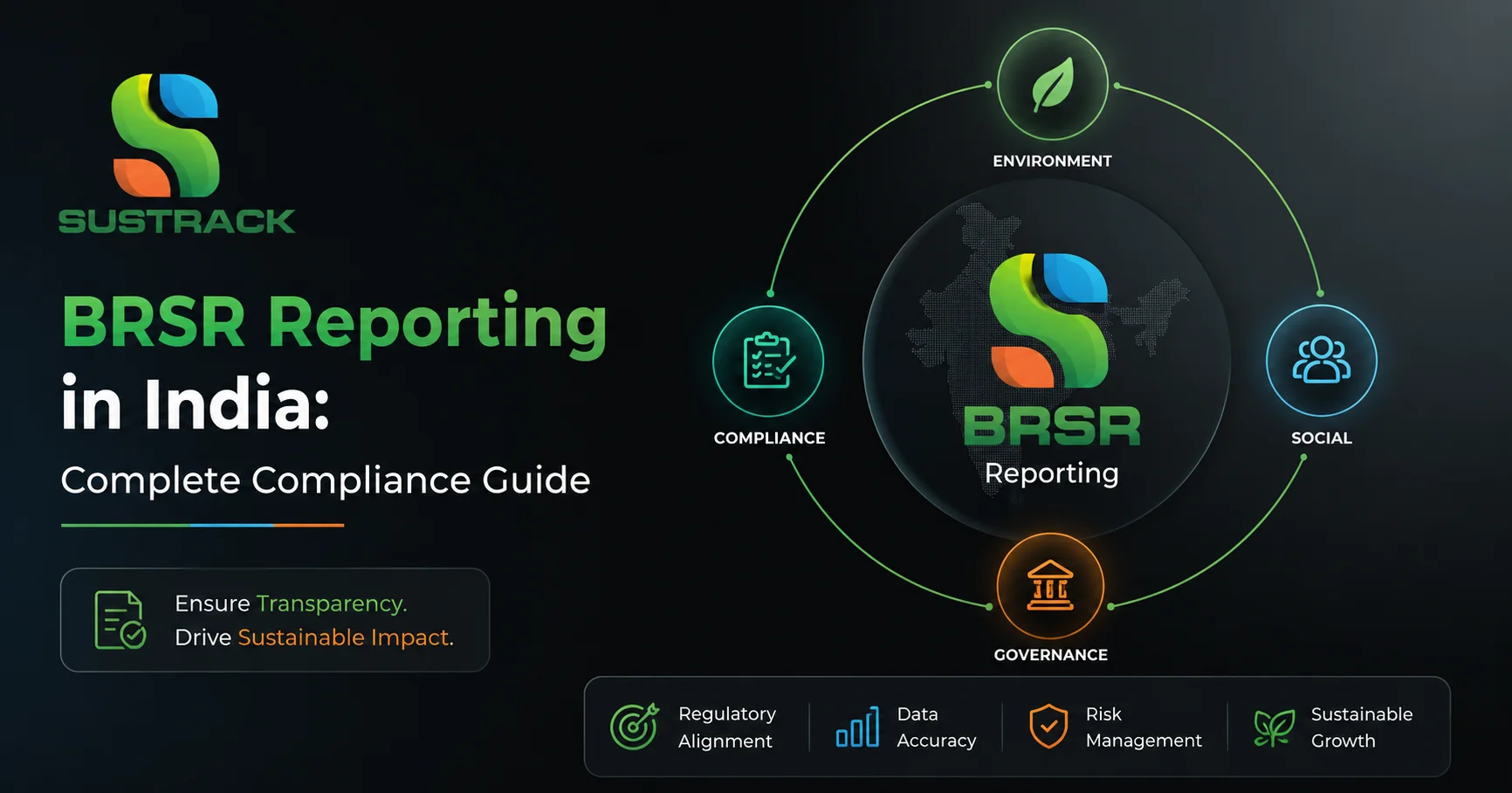
BRSR reporting in India is now important for the top 1,000 listed companies under the SEBI BRSR guidelines. Companies must share their ESG performance and sustainability details through proper BRSR reports. Today, many businesses are taking help from ESG consultancy experts like Sustrack to manage reporting, improve compliance, and build stronger sustainability practices.
With growing pressure from investors, customers, regulators, and global supply chains, companies need accurate and audit-ready reports. A trusted ESG consultancy partner like Sustrack helps businesses simplify BRSR reporting in India, follow SEBI BRSR guidelines correctly, and complete the reporting process smoothly.
What is Business Responsibility and Sustainability Reporting (BRSR)?
BRSR reporting in India is a reporting system that helps companies share their environmental, social, and governance (ESG) performance. The full form of BRSR is business responsibility sustainability report. Under the SEBI BRSR guidelines, many listed companies must submit these reports to show responsible and sustainable business practices.
A business responsibility sustainability report includes important details about a company’s energy use, employee welfare, environmental impact, ethics, and social responsibility activities. BRSR reporting in India helps businesses improve transparency, build investor trust, and support long-term sustainable development.
Objectives of BRSR Implementation
The main objective of BRSR implementation is to help companies follow sustainable business practices and improve ESG reporting India. Under the SEBI BRSR guidelines, companies use the BRSR format to share important environmental, social, and governance (ESG) information clearly and properly.
Encourage Sustainable Business Practices : The SEBI BRSR guidelines encourage companies to include ESG practices in daily business operations for long-term sustainable growth.
Improve ESG Data Quality : The BRSR format helps improve the quality, consistency, and comparability of ESG reporting India across different companies.
Follow Global Sustainability Standards : The SEBI BRSR guidelines help Indian companies align with international sustainability reporting standards and frameworks.
Build Trust Through Transparency : The BRSR format helps companies provide transparent ESG disclosures and improve trust among investors, customers, and stakeholders.
What is the BRSR Format?
The BRSR format is divided into three important sections that help companies share ESG and sustainability information properly. These sections make reporting more organised and transparent.
General Disclosures : This section gives basic information about the company, its products or services, business operations, employees, and legal compliance details.
Management and Process Disclosures : This section explains the company’s policies, systems, and processes for ethical business operations and environmental responsibility. It also shows how the company manages sustainability practices.
Principle-wise Performance Disclosures : In this section, companies report their performance based on the nine principles under the National Guidelines on Responsible Business Conduct (NGRBC). These principles include ethical business practices, employee welfare, human rights, environmental protection, sustainability, customer value, and responsible business growth.
Why Work with Sustrack for BRSR Reporting?
Many companies try to manage BRSR reporting in India on their own, but later face difficulties because the process is complex and requires detailed ESG data. Working with an experienced
ESG consultancy like Sustrack helps businesses complete their business responsibility sustainability report accurately and smoothly under the SEBI BRSR guidelines.
Ensures Full SEBI Compliance
The business responsibility sustainability report includes detailed environmental, social, and governance disclosures. Missing or incorrect information can create compliance risks for companies.
Sustrack helps businesses by:
- Correctly understanding SEBI BRSR guidelines
- Completing all nine ESG principles properly
- Managing mandatory and leadership disclosures
- Aligning reports with global ESG frameworks like GRI, SASB, TCFD, and CDP
- Preparing audit-ready ESG documents for investors and regulators
This helps reduce reporting errors and improves compliance quality in BRSR reporting in India.
Saves Internal Time, Effort, and Resources
Preparing a business responsibility sustainability report requires collecting data from many departments like HR, EHS, procurement, finance, CSR, and operations. This process can take significant time and effort.
Sustrack supports companies by:
- Managing cross-department ESG data collection
- Creating structured ESG reporting templates
- Organising business information properly
- Reducing workload for internal teams
This allows businesses to focus on daily operations while ensuring smooth BRSR reporting in India.
Ensures Accurate ESG Data and Strong Reporting
Data accuracy is very important under the SEBI BRSR guidelines. Proper ESG data improves transparency, compliance, and long-term sustainability performance.
Sustrack helps businesses by:
- Defining important ESG KPIs
- Checking environmental and social performance data
- Conducting Scope 1, Scope 2, and Scope 3 GHG assessments
- Preparing verification-ready ESG documents
Accurate ESG reporting strengthens the quality of the business responsibility sustainability report and improves trust among investors, regulators, and stakeholders.
Frequently Asked Questions
What is BRSR reporting in India?
BRSR reporting in India is a framework that helps companies share their environmental, social, and governance (ESG) performance. Under the SEBI BRSR guidelines, the top 1,000 listed companies must submit a business responsibility sustainability report using the official BRSR format.
What are the common challenges in BRSR reporting in India?
Many companies face difficulties in collecting ESG data from different departments, maintaining data accuracy, managing GHG emissions disclosures, and aligning internal policies with the SEBI BRSR guidelines. Incorrect or incomplete reporting can also create compliance risks.
What are the common challenges in BRSR reporting in India?
Many companies face difficulties in collecting ESG data from different departments, maintaining data accuracy, managing GHG emissions disclosures, and aligning internal policies with the SEBI BRSR guidelines. Incorrect or incomplete reporting can also create compliance risks.
Why is CBAM important in ESG reporting in India?
CBAM (Carbon Border Adjustment Mechanism) is important for exporters because global markets are focusing more on carbon emissions and sustainability compliance. Proper ESG reporting India and accurate business responsibility sustainability report disclosures help exporters improve transparency and meet international sustainability expectations.