Board Independence and Conflict Management in ESG Governance
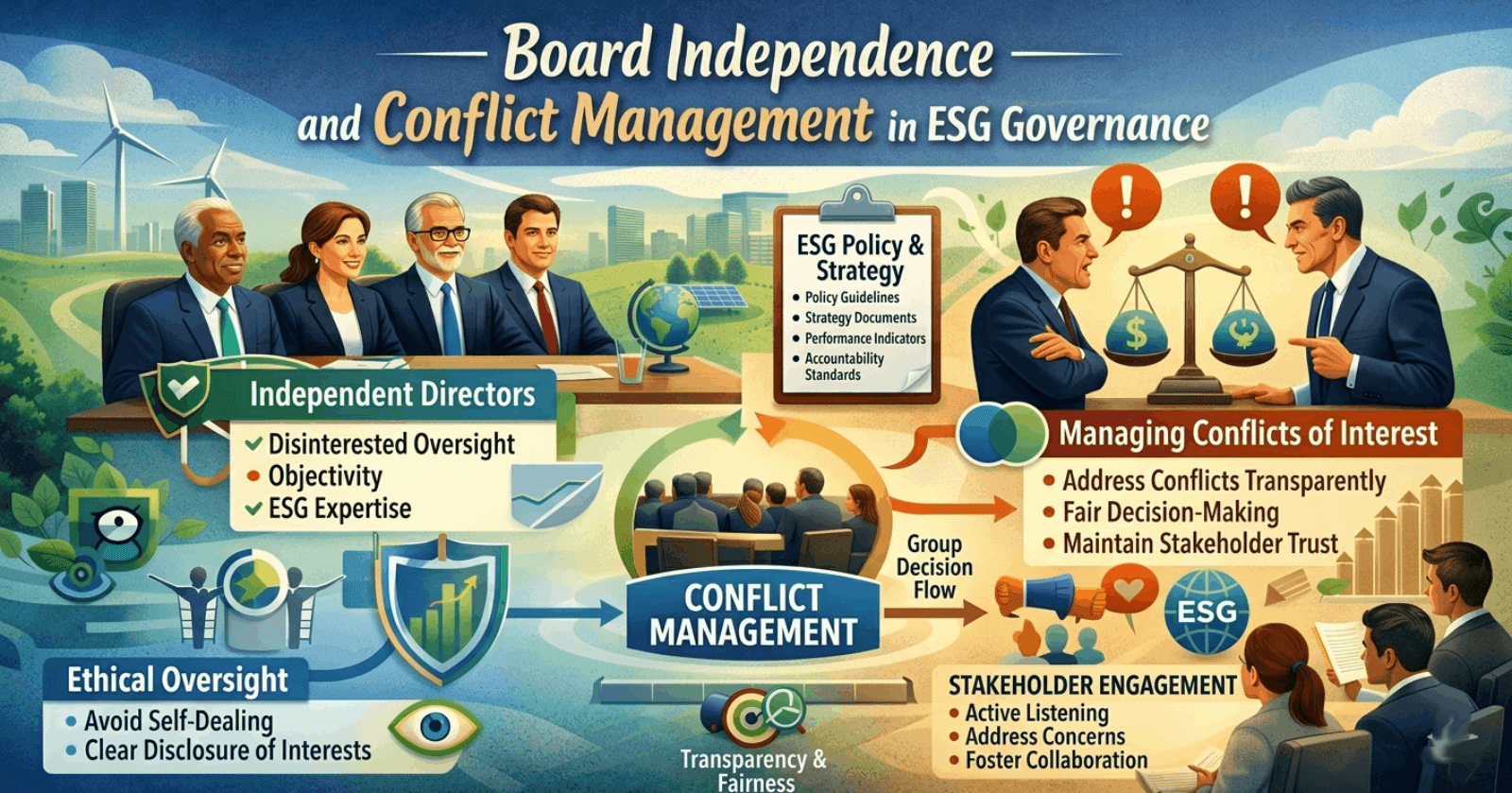
Board governance is the backbone of strong ESG practices in any organization. Board independence helps ensure that decisions are fair, unbiased, and free from conflicts of interest. When conflicts are managed properly, companies can maintain ethical leadership, protect stakeholder trust, and meet growing ESG expectations.
In this blog, we will discuss the importance of independent directors, how unmanaged conflicts create ESG risks, and why governance transparency is essential for long-term ESG compliance.
What is board independence?
Board independence means the board can make decisions freely and in the best interest of the company. It usually refers to having non-executive directors (NEDs) who are not involved in daily operations. The more non-executive directors on the board, the more independent and unbiased the board’s decisions are.
Why is Director Independence Important?
Independent directors play a key role in board governance by ensuring fair and unbiased decision-making. Their main strength is director independence, as they are not involved in daily operations and can objectively review management actions. This helps reduce conflicts of interest and improves governance transparency.
They provide independent oversight, question major decisions, and ensure financial reporting is accurate and ethical. By acting as neutral watchdogs, independent directors protect shareholder and stakeholder interests, strengthen investor confidence, and support long-term sustainability. Their experience and fresh perspective also help boards manage risks and make better strategic decisions.
The Role of Independent Directors in Shaping ESG Strategy
Independent directors play an important role in strengthening board governance by guiding companies on ESG matters. Through director independence, they help make sure ESG decisions are fair, unbiased, and focused on long-term value. Their role also improves governance transparency and supports overall ESG compliance.
From Strategy to Action : Independent directors help turn ESG plans into real actions. They align ESG goals with the company’s mission, set simple and measurable targets, and review progress regularly.
Their oversight ensures ESG is considered in key decisions like investments, expansion, and mergers, helping reduce risks and build stakeholder trust.
Preparing for the Future : With growing climate, regulatory, and social risks, independent directors help boards plan ahead. They identify ESG risks and opportunities and support better decision-making in changing conditions.
This approach improves resilience, strengthens ESG compliance, and supports long-term, sustainable growth.
Why Choose Sustrack for Strong ESG Governance and Board Transparency?
Sustrack helps companies strengthen board governance and ensure ESG compliance. It supports director independence by enabling fair and unbiased decision-making, improving governance transparency, and managing conflicts effectively.
Our team helps businesses align their governance practices with leading ESG reporting frameworks such as GRI, CDP, and BRSR, ensuring regulatory compliance, better disclosures, and stronger investor trust.
With Sustrack, organizations can conduct advisory-led governance reviews, implement strong whistleblower and speak-up mechanisms, and build trust with stakeholders. This makes it easier to maintain ethical leadership, reduce ESG risks, and achieve long-term sustainable growth.
Wrapping Up
Strong board governance relies on director independence, clear governance transparency, and consistent ESG compliance. Independent directors help identify and manage conflicts of interest, reduce ESG risks, and ensure fair and ethical decision-making.
When conflicts are not managed, they can harm trust, weaken governance, and create regulatory and reputational risks.
Advisory-led governance reviews help boards regularly improve their processes and stay aligned with ESG expectations. At the same time, strong whistleblower policy and speak-up mechanisms allow issues to be reported early and addressed quickly.
Together, these practices strengthen board governance, support ESG compliance, and help companies build long-term trust, stability, and sustainable growth.
Frequently Asked Questions
Why is board governance important?
Why is board governance important?
Strong board governance helps maintain accountability, protect stakeholder interests, reduce risks, and support sustainable business growth.
What does director independence mean?
Director independence means that board members can make decisions freely, without influence from company management, personal interests, or daily operations.
How does governance transparency benefit a company?
Transparent governance builds stakeholder confidence, improves investor trust, and supports ethical and responsible management.
Why is ESG compliance important for companies?
ESG compliance helps companies reduce risks, improve reputation, attract investors, and ensure long-term sustainable growth.