Designing an Effective Code of Ethics for ESG Compliance
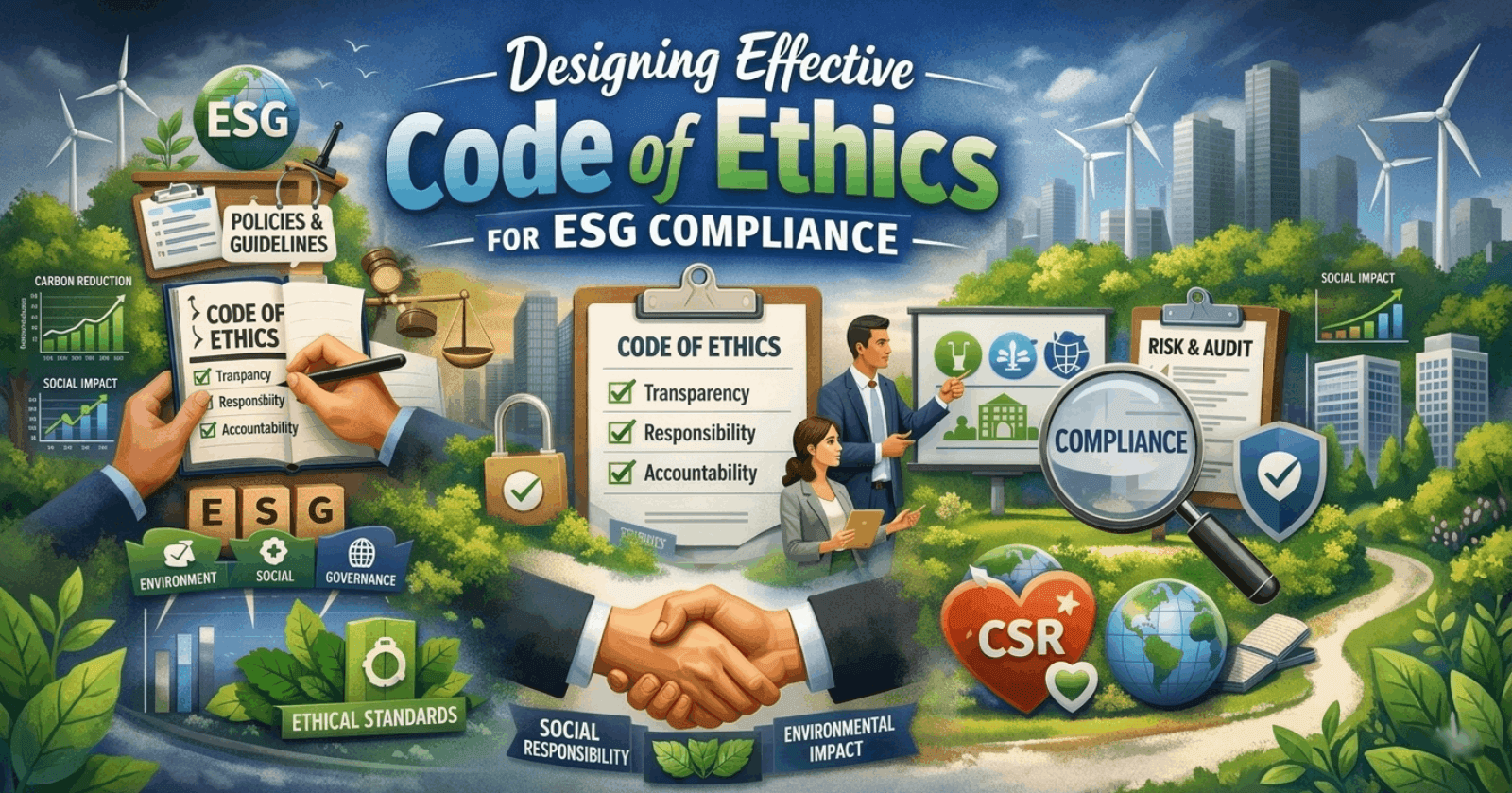
Businesses are expected to operate themselves ethically and openly because of the rising ESG norms. A simple code of ethics is essential to ESG governance and builds long term trust.
A straightforward and practical ethical framework is important for businesses wanting to meet stakeholder, regulatory, and investor expectations.
Companies are now known not only for their environmental and social performance, but also for the their good corporate ethics and governance practices.
It promotes accountability, reduces governance risks, and ensures that ethical behavior is integrated in daily operations.
What Is the Code of Ethics in ESG?
A code of ethics is a set of rules that defines the goals, standards of behaviour and values that an organisation expects from its leadership, management, and staff. When making decisions and carrying out their responsibilities, it helps people in understanding what is considered ethical and responsible behaviour.
From a corporate perspective, a code of ethics covers a wide range of topics, including honesty, transparency, compliance to the law, treating stakeholders fairly, avoiding conflicts of interest, and responsibility. It acts as an industry standard for moral choices and helps in the avoidance of misconduct, fraud, and ineffective management.
How can Businesses Align Ethics with ESG Expectations?
Ensuring that a company’s Business Ethics support proper environmental, social, and governance activities is required to align ethics with ESG Management.
An effective code of ethics guides everyday decision-making and helps businesses to act responsibly in areas such as environmental protection, fair labor practices, transparency, and ethical leadership.
When Business Ethics are directly linked to ESG Management, businesses can easily build trust with stakeholders, reduce regulatory risks, and improve their ESG performance and reporting.
Common Gaps in Ethics Policies
Many organizations implement a code of ethics in place, but often these policies do not meet complete ESG Management requirements. Businesses may face gaps that make their ethics policies less effective in practice. Here are some common issues that may affect corporate ethics policy.
- Many ethics policies are too common and are not customized for the specific ESG risks faced by the business. Without customised strategy, the policies may not overcome real challenges in environmental, social, or governance areas.
- Many policies do not clearly explain how to manage conflicts of interest for employees, board members, or directors, which can arise confusion and unethical decision-making situations.
- A policy without accountability is ineffective because employees and management may fail to meet.
- Sometimes, ethics policies are not linked to ESG reporting, which makes it difficult to track compliance or show ethical practices to investors and regulators.
Role of ESG Consultants in Policy Design
An ESG-aligned code of ethics is not just about following the law. ESG consultants play an important role in making ethics policy by following the compliance framework.
They help businesses create practical and effective ethics policies that support their ESG goals.
ESG experts help businesses:
- ESG experts help in identifying ethics-related ESG risks specific to their industry.
- They align ethics policies with global standards such as GRI and ESG regulations
- Integrate ethics into broader ESG governance and reporting structures
- Build practical, enforceable compliance frameworks
With professional guidance, companies can easily move from basic policies to effective ethical systems that support ESG performance and long-term sustainability.
Why Choose Sustrack for Your ESG-Aligned Code of Ethics?
At Sustrack, we help businesses to design and implement a good code of ethics policy that build corporate ethics, supports ESG Management, and creates a practical compliance framework. In today’s business environment, companies are known not just on environmental and social performance but also for the transparency and accountability of their operations.
We provide multiple services in ESG, such as GRI Reporting, BRSR Reporting, Carbon Accounting, ESG consultancy servcies and more that align business with ESG goals.
Wrapping Up
A code of ethics is the backbone of good Business Ethics and effective ESG Management. It helps businesses to act responsibly every day, reduces risks, and meets the expectations of stakeholders, regulators, and investors.
By identifying common gaps, managing conflicts of interest, and linking policies to ESG reporting, companies can make ethics a practical part of their operations.
With the help of ESG consultants, businesses can build a clear compliance framework that supports long-term ESG goals.
At Sustrack, we help organizations to make and implement ethics policies that build good Business Ethics, improve ESG governance, and align business practices with ESG goals.
Frequently Asked Questions
Why is Corporate Ethics important for ESG Governance?
Business Ethics are important for ESG Management because strong Business Ethics ensure that businesses operate transparently, responsibly, and fairly.
When aligned with ESG governance, ethical practices help reduce risks, build trust with stakeholders, and improve ESG performance.
What are common gaps in ethics policies?
Common gaps include general policies, unclear rules on conflicts of interest, and no link to ESG reporting. These kind of issues may affect effective Business Ethics and ESG Management.
Why is a compliance framework important for ESG?
A compliance framework ensures that ethical policies are not just on paper but are followed in daily operations. It strengthens ESG Management, reduces risks, and helps meet stakeholder and regulatory expectations.
Why choose Sustrack for ESG-aligned Code of Ethics?
At Sustrack, we help businessesto implement effective ethics policies that strengthen Business Ethics, support ESG governance, and establish a practical compliance framework.