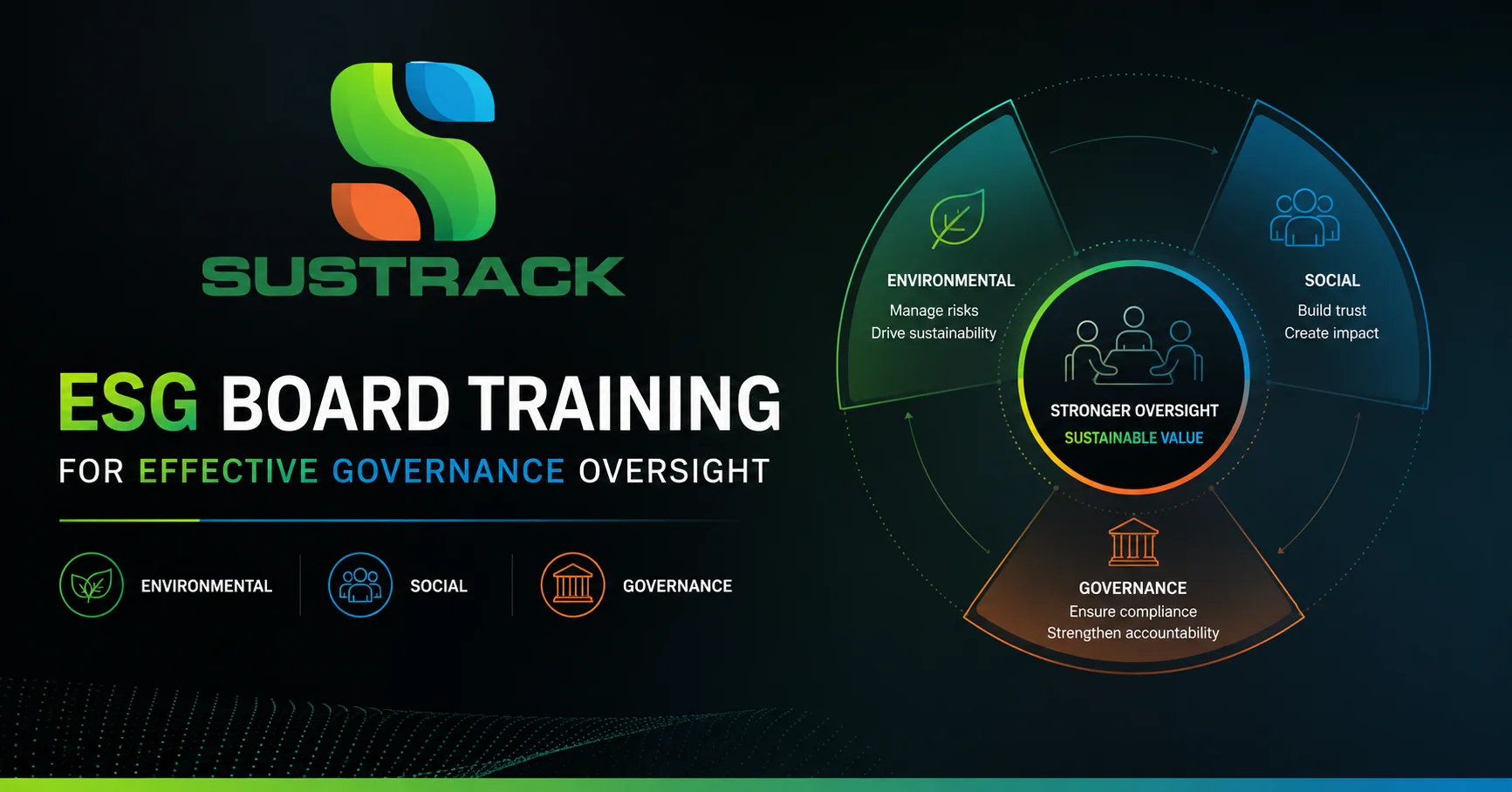
ESG Board Training for Effective Governance Oversight
People are paying attention to how companies treat the environment and society. As environmental, social, and governance expectations rise across global markets, organisations are being held accountable not only for financial performance but also for how responsibly they are governed. At the centre of this shift lies board governance, which determines how effectively a company responds to regulatory requirements, stakeholder expectations, and long-term sustainability risks. ESG consulting has become essential in strengthening board governance, addressing capability gaps, and ensuring directors are equipped to oversee ESG integration responsibly.
In today’s regulatory environment, ESG is no longer a compliance checkbox; it is a strategic governance priority. This is why ESG consulting plays a critical role in improving board governance, clarifying director responsibilities, and embedding governance best practices into decision-making frameworks.
ESG Competency Gaps at Board Level
Many boards are composed of highly experienced leaders, yet a significant gap remains in ESG knowledge and oversight. Traditional board skill sets often focus on finance, operations, and legal compliance, while ESG introduces new complexities, including climate risk, social impact, data transparency, and non-financial disclosures. Without adequate understanding, board governance becomes reactive rather than strategic.
One of the most common challenges is unclear director responsibilities related to ESG. Directors are increasingly expected to oversee sustainability risks, approve ESG strategies, and ensure accurate reporting, yet many lack formal training in these areas. This exposes the company to regulatory penalties, reputational risks, and investor scrutiny.
Weak ESG competency also limits the board’s ability to implement governance best practices, such as independent oversight of sustainability initiatives, integration of ESG into enterprise risk management, and alignment with global reporting frameworks. ESG consulting helps boards identify these gaps and strengthen board governance through structured assessments and capability-building initiatives.
Customised ESG Training Programs
To address these challenges, ESG consulting firms design ESG board training programs tailored to the organisation’s sector, regulatory environment, and maturity level. Generic workshops are no longer sufficient; boards require targeted learning that directly links ESG risks and opportunities to governance outcomes.
Effective ESG board training focuses on enhancing awareness of evolving regulations, investor expectations, and global standards, including GRI, BRSR, and sustainability disclosures. These programs also clarify director responsibilities by defining the board’s role in ESG strategy approval, performance monitoring, and disclosure integrity.
Customised ESG board training ensures that sustainability oversight is not limited to one committee but is embedded across the entire board. This strengthens board governance by enabling directors to ask informed questions, challenge management effectively, and align ESG initiatives with corporate strategy.
Through ESG consulting, companies can institutionalise governance best practices such as regular ESG reviews at board meetings, clearly defined accountability structures, and performance-linked sustainability KPIs. Over time, this approach transforms ESG from an operational initiative into a core governance function.
Improving Board Effectiveness
Strong board governance directly impacts organisational resilience, regulatory compliance, and long-term value creation. ESG consulting enhances board effectiveness by helping directors shift from passive oversight to proactive leadership in sustainability and risk management.
One of the key outcomes of structured ESG consulting is improved clarity around director responsibilities. When roles are clearly defined, boards can better oversee ESG risks, including climate exposure, supply chain ethics, and data integrity. This clarity also reduces directors’ personal liability risks in an increasingly regulated environment.
By adopting governance best practices, boards improve transparency, accountability, and decision quality. These practices include integrating ESG metrics into performance evaluations, establishing dedicated ESG oversight mechanisms, and aligning executive incentives with sustainability outcomes.
Regular ESG board training further enhances board effectiveness by keeping directors up to date on regulatory changes, emerging risks, and global trends. This ongoing learning approach ensures that board governance evolves alongside external expectations, rather than lagging behind them.
Ultimately, ESG consulting enables boards to transition from compliance-driven governance to value-driven governance, where sustainability considerations actively support business growth and stakeholder trust.
ESG Consulting as a Governance Enabler
The importance of ESG consulting extends beyond reporting or compliance support. It acts as a governance enabler by embedding ESG into the board’s strategic oversight framework. Through structured diagnostics, training, and advisory support, ESG consulting strengthens board governance and ensures alignment with global governance best practices.
As regulatory scrutiny increases and investors demand higher transparency, boards can no longer afford ESG blind spots. Clear director responsibilities, supported by ongoing ESG board training, are essential to maintaining compliance and protecting the organisation’s reputation.
In a rapidly evolving business landscape, strong board governance is not just about control; it is about foresight, accountability, and sustainable leadership. ESG consulting equips boards with the tools and knowledge needed to govern responsibly, comply confidently, and lead organisations toward long-term resilience.
Wrapping Up
In an era of increasing regulatory scrutiny and stakeholder expectations, strong board governance has become central to business resilience and credibility. ESG consulting plays a critical role in strengthening board governance by addressing ESG competency gaps, clarifying director responsibilities, and embedding proven governance best practices into leadership frameworks.
Through structured advisory support and targeted ESG board training, organisations can equip directors with the knowledge required to oversee sustainability risks, ensure compliance, and guide long-term strategy. Ultimately, ESG consulting empowers boards to move beyond reactive compliance and toward proactive, value-driven governance that supports sustainable growth and investor confidence.
Frequently Asked Questions
Why is board governance important in ESG compliance?
Board governance ensures that ESG risks, disclosures, and strategies are properly overseen at the highest level. Effective governance helps organisations meet regulatory requirements, manage non-financial risks, and maintain transparency with investors and stakeholders.
How does ESG consulting improve board effectiveness?
ESG consulting strengthens board governance by identifying skill gaps, defining director responsibilities, and implementing governance best practices. It enables boards to integrate ESG into strategic decision-making rather than treating it as a reporting exercise.
What is ESG board training and why is it needed?
ESG board training equips directors with practical knowledge of sustainability regulations, ESG risks, and reporting frameworks. It ensures directors can fulfil their oversight role confidently and align ESG initiatives with business strategy.
What director responsibilities are linked to ESG governance?
Key director responsibilities include approving ESG strategy, overseeing sustainability risks, ensuring accurate disclosures, and monitoring ESG performance. Clear accountability at the board level reduces compliance risks and enhances governance credibility.
How do governance best practices support ESG integration?
Governance best practices, such as regular ESG reviews, clear accountability structures, and performance-linked sustainability metrics, help embed ESG into core governance systems and improve long-term organisational resilience.
Is ESG board training a one-time activity?
No. Effective ESG board training is an ongoing process that evolves with regulatory changes, investor expectations, and emerging sustainability risks. Continuous learning is essential for maintaining strong board governance.