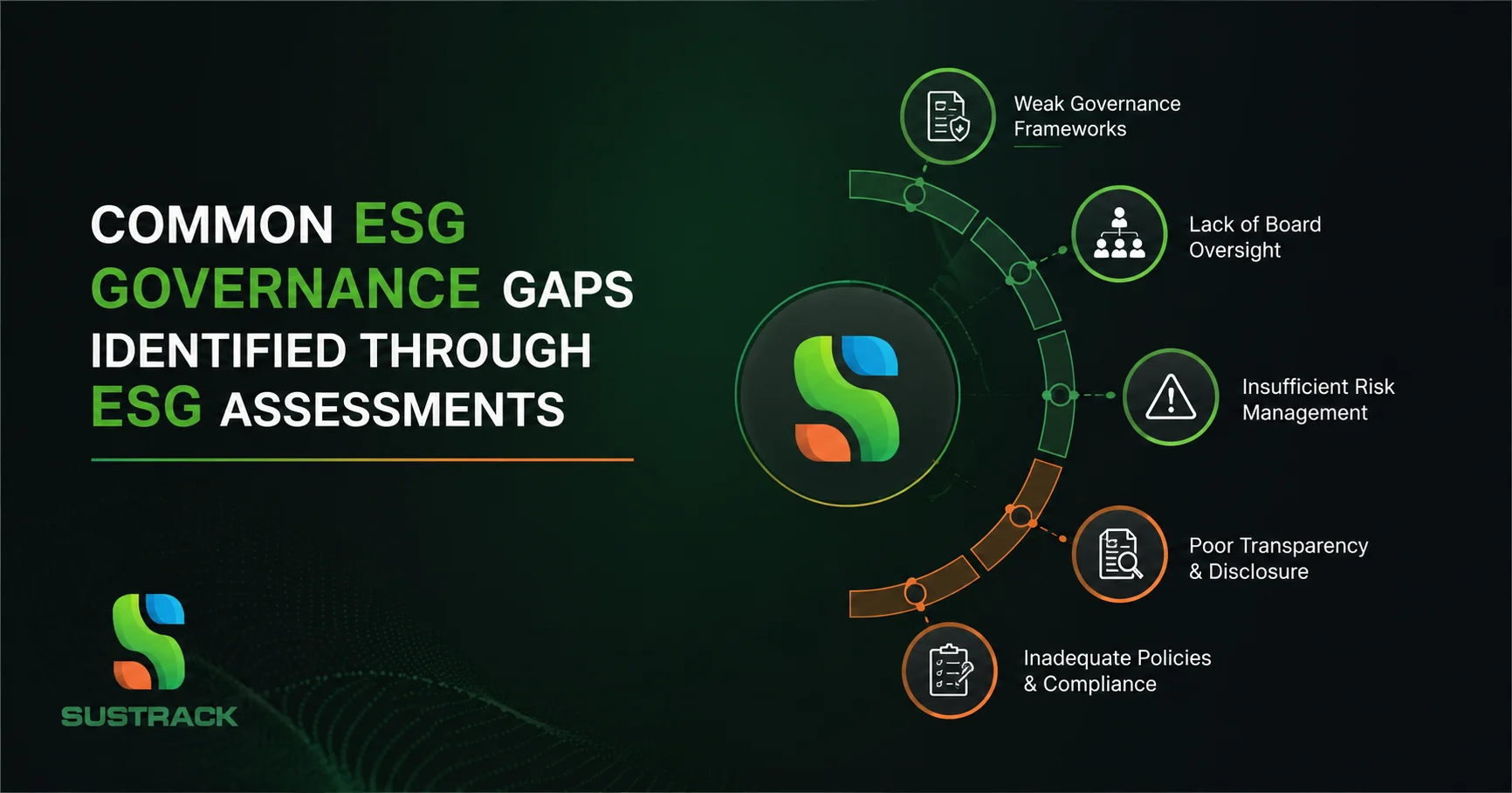
Common ESG Governance Gaps Identified Through ESG Assessments
As pressure from regulators, investors, and stakeholders continues to grow, strong ESG governance is becoming essential for businesses. Yet, many organisations struggle to turn their ESG goals into clear actions and systems.
ESG assessments often highlight common governance gaps that can lead to compliance issues, higher risks, and loss of stakeholder trust. Identifying these gaps is the first step toward building transparent, accountable, and effective ESG frameworks that support long-term and sustainable growth.
What is an ESG Gap Analysis?
An ESG gap analysis helps companies understand what is missing or weak in their ESG approach. It reviews a company’s ESG policies, data, and reporting to see how well they match regulatory requirements, industry best practices, and investor expectations.
The purpose is to identify gaps and create a clear plan to improve ESG performance and reporting. An ESG gap analysis can focus on one standard, such as CSRD, or cover multiple frameworks that a company plans to follow.
By doing an ESG gap analysis, organisations can:
- Meet ESG regulations and standards like CSRD and IFRS (S1 & S2)
- Improve ESG data quality and reporting accuracy
- Build trust with investors by showing ESG progress
- Identify risks, opportunities, and areas to strengthen the sustainability strategy
Benefits of Conducting an ESG Gap Analysis
An ESG gap analysis gives companies a structured approach to identifying and addressing weaknesses in their sustainability practices. This foundational step brings many benefits to a company’s ESG function.
Navigating compliance with regulatory requirements
Regulatory requirements for ESG reporting are becoming far more demanding. Conducting a gap analysis helps companies understand their obligations under frameworks like CSRD and the ISSB (International Sustainability Standards Board), and how their current disclosures measure up against new frameworks and standards.
A proper gap analysis will reveal where companies are lacking on disclosures, allowing them to spend more of their reporting time closing gaps rather than re-inventing the wheel or re-writing disclosures that they’ve already produced elsewhere.
Streamlining ESG reporting processes
Many organizations struggle with fragmented ESG data. A gap analysis helps centralize and standardize ESG information, making reporting more efficient and reliable.
It also improves interoperability between different ESG frameworks, reducing redundancy in reporting and giving teams necessary time back for execution rather than disclosure.
Refining corporate sustainability strategies
By identifying areas for improvement, companies can refine their sustainability strategies, prioritize high-impact initiatives, and track their progress over time. A well-executed ESG gap analysis helps companies line up sustainability goals with their core business KPIs and the expectations of their various stakeholders.
Strengthening investor and stakeholder confidence
Speaking of stakeholders, investors and other stakeholders have shown demonstrated interest in companies that take ESG seriously. Organizations that proactively address ESG gaps are more likely to attract investment, build trust with consumers, and maintain a strong corporate reputation.
Simple Steps to Conduct an ESG Assessment and Gap Analysis
A structured ESG gap analysis helps organisations strengthen ESG governance and identify gaps before they become compliance or risk issues. Using a clear, step-by-step approach makes the ESG gap analysis easier to manage and more effective.
Using the right tools, such as ESG compliance software, can also save time and reduce manual effort.
Collect ESG Information : Start by gathering all available ESG data from internal and external sources. This may include sustainability reports, policies, regulatory filings, stakeholder feedback, and industry benchmarks. Make sure the information is complete and up to date.
Identify What Matters Most (Materiality Assessment) : A materiality assessment helps identify the ESG topics that are most important to the business and its stakeholders. This involves reviewing ESG risks and opportunities through stakeholder discussions, surveys, competitor disclosures, and industry regulations.
Check for Regulatory and Governance Gaps : Compare current ESG practices with regulatory requirements and industry standards. This step highlights gaps in ESG governance, reporting, and data collection that need improvement.
Create a Clear Action Plan : Develop a simple action plan to close the identified gaps. Set clear ESG goals, define KPIs, and outline steps to improve data collection, reporting, and decision-making processes.
Update ESG Reporting : Once improvements are made, update ESG disclosures to reflect changes. This ensures reports shared with regulators, investors, and stakeholders are accurate and aligned with best practices.
Monitor Progress and Improve Continuously : ESG governance is an ongoing process. Regularly track ESG performance, review progress, and adjust strategies as regulations and business needs evolve. Using dashboards and periodic reviews helps ensure continuous improvement.
Common ESG Assessment Challenges and Simple Solutions
During an ESG gap analysis, organisations often face practical challenges that can slow down progress or lead to compliance gaps. With the right ESG consulting approach and tools, these challenges can be effectively managed.
No Common ESG Standards : One major challenge is the lack of a single ESG reporting standard. Different frameworks have different requirements, making compliance confusing. This can be addressed by aligning with well-known frameworks such as CSRD, ISSB, and GRI, and using ESG tools that help compare and align multiple standards.
ESG Data Is Hard to Collect : Many companies struggle to collect ESG data from multiple departments and systems. When data is scattered, it becomes difficult to analyse and report accurately. Using ESG software can help centralise data, reduce manual work, and improve data accuracy.
Limited Time, Budget, and Expertise : An ESG gap analysis can require significant resources, which may be challenging for smaller teams. ESG consulting supported by AI-driven compliance tools can simplify the process, save time, and help identify compliance gaps without overloading internal teams.
Why Choose Sustrack for Your ESG Assessment?
Sustrack helps organisations move beyond ESG checklists and build strong, practical ESG governance. Our ESG gap analysis approach focuses on identifying real compliance gaps, improving data quality, and aligning ESG efforts with business goals.
We combine regulatory expertise with advisory-led insights to help organisations understand where they stand against frameworks such as CSRD, ISSB, and IFRS (S1 & S2). Instead of generic recommendations, Sustrack delivers clear, actionable roadmaps that boards and leadership teams can implement with confidence.
Frequently Asked Questions
What is an ESG assessment?
An ESG gap analysis is a structured review of a company’s environmental, social, and governance practices. It evaluates policies, data, and disclosures to identify compliance gaps, governance weaknesses, and areas for improvement.
How does an ESG assessment help improve ESG governance?
An ESG gap analysis highlights gaps in decision-making, oversight, and accountability. By addressing these gaps, organisations can strengthen ESG governance, improve board oversight, and ensure ESG goals are supported by clear processes and controls.
What are common ESG governance gaps identified through ESG assessments?
Typical governance gaps include lack of board-level oversight, unclear ESG roles and responsibilities, weak data management systems, and misalignment between ESG strategy and business objectives.
What is an ESG gap analysis and why is it important?
An ESG gap analysis identifies what is missing or weak in a company’s ESG strategy, reporting, or compliance. It is important because it helps organisations understand regulatory expectations, reduce risk, and create a clear improvement roadmap.