Managing Conflict of Interest at Board Level Under ESG
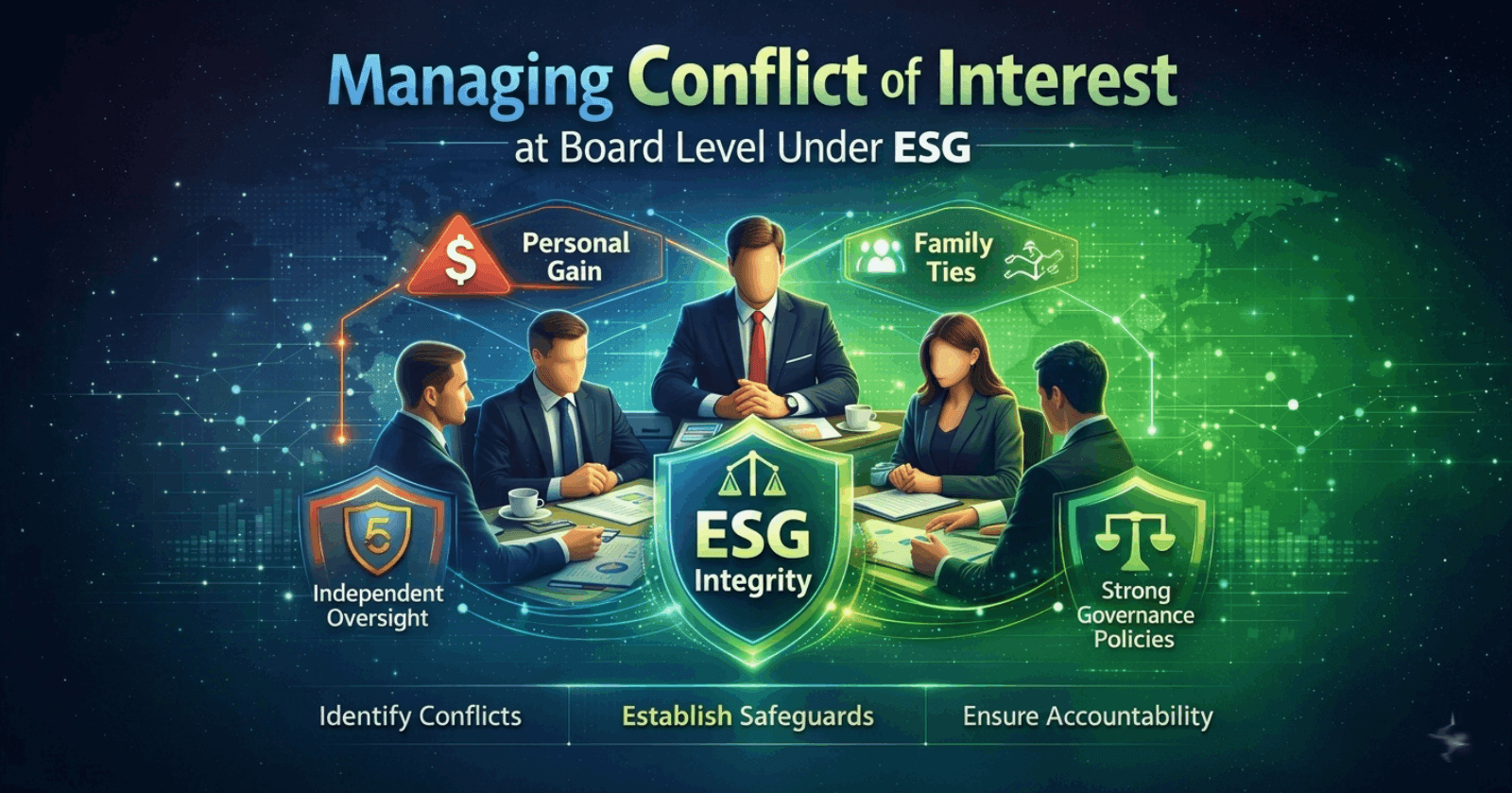
Today, ESG (Environmental, Social, and Governance) plays an important role in how investors, regulators, and stakeholders evaluate companies. With the support of ESG consultancy services, businesses can strengthen ESG governance, including how conflicts of interest are managed at the board level.
If board-level conflicts are not handled properly, they can weaken ethical leadership, affect board governance, and damage a company’s performance and reputation. This blog explains how to identify and manage board-level conflict risks effectively.
How to Identify and Manage Board of Directors’ Conflicts of Interest?
Managing conflicts at the board level is important for strong board governance and ESG governance. Here’s how to identify and handle conflicts of interest among directors effectively.
Create a Policy and Process : Start by having a clear conflict of interest policy for your board. This policy should define what counts as a conflict, who it applies to, and what happens if rules are not followed.
Directors should disclose their outside interests every year and update the register if anything changes. Cover both financial and non-financial interests to ensure full transparency. A strong policy strengthens board governance and supports good ESG governance.
Monitor for Conflicts : It’s important to monitor directors’ interests regularly. Review financial disclosures, track decision patterns, and use tools or software to flag potential conflicts early. Regular audits and whistleblowing channels also help spot issues before they affect the board. Monitoring ensures your conflict of interest policy works in practice and reinforces board governance.
Manage Conflicts : When conflicts arise, the board should decide if a director’s duties are affected. Options include allowing discussion but no voting, recusal, independent oversight, or removing the conflicting interest. Always document actions in meeting minutes. Proper handling of conflicts demonstrates strong board governance and shows commitment to ESG governance principles.
Prevent Future Conflicts :Prevent conflicts by including the conflict of interest policy in onboarding for new directors and providing training on how to identify and report conflicts.
Conduct due diligence on contracts, encourage transparency, and maintain a system for reporting gifts or hospitality. These steps promote a culture of accountability and strengthen both board governance and ESG governance.
Understanding Board-Level Conflict Risks
A conflict of interest happens when a board member’s personal or professional interests could affect their decisions. This could be due to financial stakes, relationships with suppliers or competitors, or holding roles in multiple companies.
Such conflicts can hurt decision-making and reduce investor trust. For companies focused on ESG governance, conflicts at the board level can also affect sustainability goals, social responsibility, and overall transparency.
Having a strong conflict of interest policy is important to maintain good board governance and ensure ethical, fair decisions.
Disclosure and Recusal Mechanisms
A strong conflict of interest policy is essential to make sure board members always act in the best interest of the company. Proper mechanisms help prevent personal interests from affecting important decisions and strengthen overall board governance.
Full Disclosure: Board members should openly share any potential conflicts of interest as soon as they arise. This includes financial investments, outside business roles, or personal relationships that could influence decisions. Early disclosure helps the board identify risks quickly and take steps to prevent them from affecting company decisions.
Recusal Procedures: When a conflict is identified, the affected director should step aside from discussions or decisions related to the issue. Recusal prevents any undue influence, ensures fairness, and protects the integrity of the board’s decision-making. It also shows that the company takes its ESG governance responsibilities seriously.
Documentation: All disclosures and recusals should be properly recorded in meeting minutes or a register. Keeping accurate records demonstrates accountability and transparency, making it easier to show stakeholders that the company follows its conflict of interest policy. Documentation also protects the board in case of audits or external reviews.
Why Sustrack Is the Right Partner for Ethical Board Governance?
At Sustrack, we help companies build strong and ethical board governance through reliable ESG consultancy services. We support organizations in managing board-level risks, conflicts of interest, and governance responsibilities with transparency and clarity.
Our team works closely with businesses to align their governance practices with leading ESG reporting frameworks such as GRI, CDP, and BRSR. This ensures boards meet regulatory requirements, improve disclosure, and build investor confidence.
By focusing on practical implementation, Sustrack helps boards make fair decisions, strengthen ethical leadership, and maintain strong ESG governance that supports long-term business success.
Wrapping Up
Managing conflicts of interest at the board level is very important for strong board governance, good ESG governance, and maintaining ethical leadership. A clear conflict of interest policy, combined with proper monitoring, disclosure, and recusal, helps boards make fair and transparent decisions.
Following these steps builds trust with investors and stakeholders, protects the company’s reputation, and ensures decisions are aligned with both business goals and ESG principles. Strong governance at the board level shows that the company values ethical leadership and practices ESG governance in every decision.
Frequently Asked Questions
Why is managing conflicts at the board level important?
Board-level conflicts can weaken decision-making, reduce investor trust, and harm the company’s reputation. Managing conflicts ensures ethical leadership, strong board governance, and alignment with ESG governance principles.
How can boards identify conflicts of interest?
Boards can identify conflicts by requiring directors to disclose outside interests, reviewing financial disclosures, monitoring decision patterns, and using tools or software to flag potential conflicts early.
How can conflicts of interest be managed effectively?
Conflicts can be managed by limiting a director’s involvement in decisions, recusal, appointing independent directors, or removing the conflicting interest. Documenting all actions ensures transparency and promotes ethical leadership.
How do investors view conflicts of interest at the board level?
Investors expect transparency in how conflicts are managed. Companies that follow a clear conflict of interest policy and demonstrate strong board governance show commitment to ethical leadership and good ESG governance, which builds investor trust.