Top GHG Assurance Standards: ISO 14064, ISAE 3410 & More
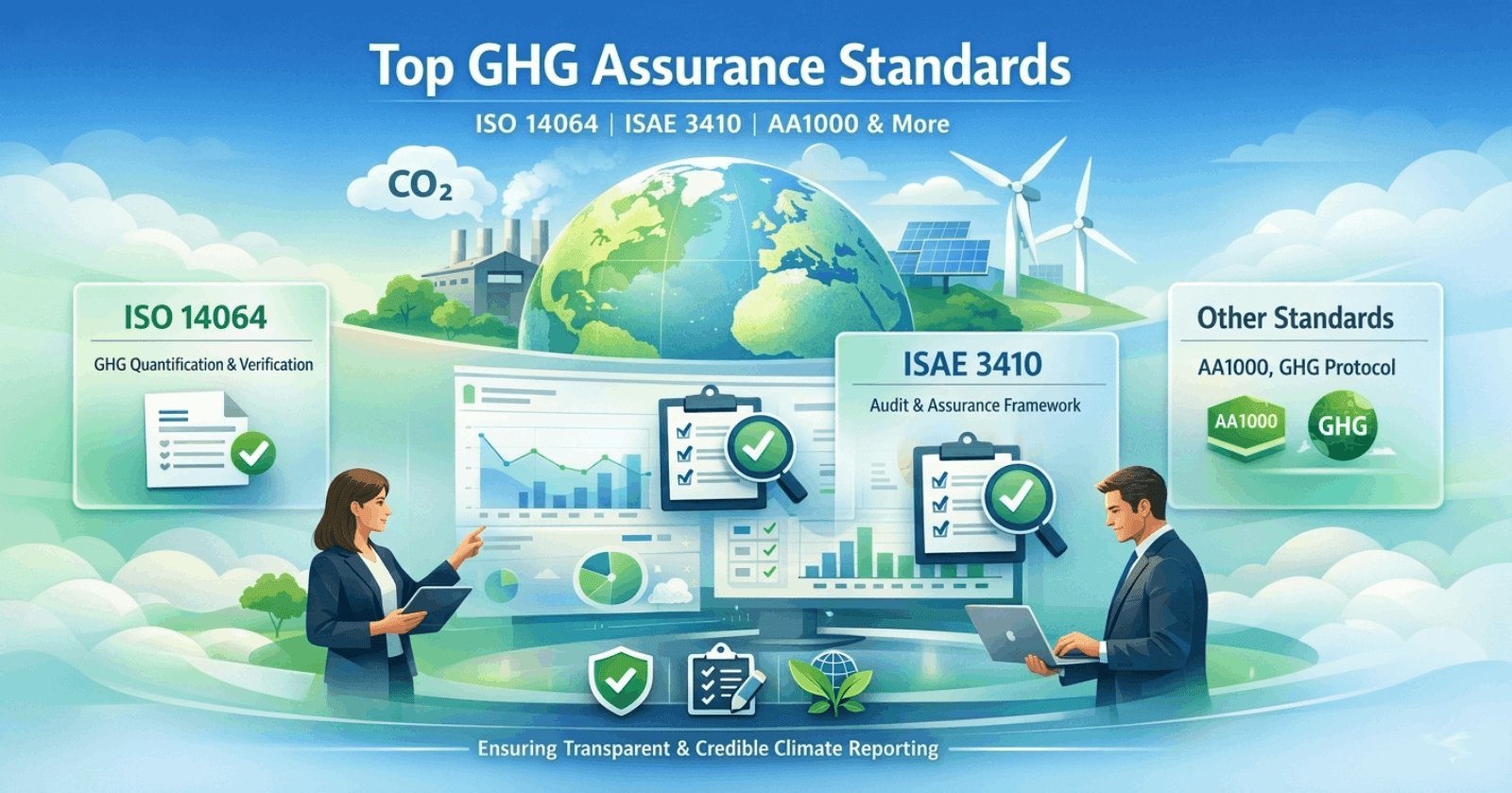
As businesses face increasing pressure for transparent and reliable climate reporting, GHG Assurance Standards play a crucial role in verifying emissions data. Verified GHG reports help organizations build trust with investors, regulators, and customers while ensuring compliance with sustainability and ESG requirements.
Different audit frameworks are used to check the accuracy of greenhouse gas data. Leading standards like ISO 14064, ISAE 3410, and AA1000AS define how emissions should be measured, verified, and reported. Each framework follows a different approach, provides different levels of assurance.
Knowing these GHG Assurance Standards helps companies pick the right method to achieve their climate goals, meet reporting needs, and reach net-zero targets.
What Are the GHG Assurance Standards?
GHG Assurance is the process of identify a company greenhouse gas emissions data to ensure it is accurate, complete, and reliable. It helps businesses meet GHG Assurance Standards, follow environmental regulations, and stay aligned with ESG goals.
Through independent audit frameworks, experts review emission records, calculations, and reporting methods to confirm they meet international standards like the GHG Protocol and ISO 14064.
Reliable GHG assurance helps companies share clear emission reports, build trust with stakeholders, and find ways to cut carbon emissions. Sustainability becomes more important globally, using the right GHG Assurance Standards and audit frameworks is important for responsible environmental management and reliable climate reporting.
Advantages of GHG Assurance
Adopting strong GHG Assurance Standards, audit frameworks, and emissions verification standards helps organizations ensure accurate reporting, meet compliance needs, and strengthen trust with investors, customers, and regulators.
- Identify Risks and Opportunities : By using trusted GHG Assurance Standards and audit frameworks, organizations can check their emissions data, spot inefficiencies, and find ways to improve and save costs.
- Meet Stakeholder Expectations : Reliable emissions verification standards help businesses show transparency and accountability, meeting stakeholder and customer demands for accurate and credible environmental information.
- Stand Out from Others : The right GHG Assurance Standards show a company focus on sustainability and help attract potential customers and partners.
- Enhance Data Accuracy : Reliable audit frameworks keep emissions data accurate and reliable, which help companies to make better decisions, set clear targets, and track progress toward sustainability goals.
- Build Investor Confidence : Verified emissions data under trusted emissions verification standards shows investors that a company takes environmental risks and long-term sustainability seriously.
Overview of Key Standards and Methodologies
The ISO 14064 series is a widely used GHG Assurance Standard that helps organizations track, report, and check their greenhouse gas emissions. These emissions verification standards are divided into three main sections, each serving a different reporting need.
-
ISO 14064
Businesses use GHG Assurance Standards such as ISO 14064 to measure, manage, and share their greenhouse gas (GHG) emission data in a reliable way.
As pressure grows on organizations to take action on climate change, emissions verification standards provide a simple and reliable way to measure environmental impact and track progress toward emission reduction goals. Below is an overview of ISO 14064 and other key GHG Assurance Standards that help companies maintain transparent and trustworthy GHG reporting.
The ISO 14064 series is one of the most globally used GHG Assurance Standards, offering a complete framework for organizations to measure, report, and verify their greenhouse gas emissions. These emissions verification standards are divided into three key parts, each focusing on a different area of GHG reporting:
ISO 14064-1 (Organizational level): It sets rules for measuring and reporting a company total GHG emissions, helping businesses track their carbon footprint and report it accurately.
ISO 14064-2 (Project level): Focuses on projects that main objective is to reduce GHG emissions or enhance carbon sequestration, providing guidance for calculating and monitoring project-based results.
ISO 14064-3 (Validation and verification): Outlines the requirements for validating and verifying GHG reports and claims, supporting credible third-party verification and assurance.
ISAE 3410: : ISAE 3410 means International Standard on Assurance Engagements 3410, which covers Assurance Engagements on Greenhouse Gas (GHG) Statements.
It was created by the International Auditing and Assurance Standards Board (IAASB) to guide auditors in checking and verifying a company’s greenhouse gas (GHG) emissions reports.
ISAE 3410 guides auditors on how to plan, perform, and report GHG assurance work, ensuring a company emissions data is accurate and reliable for investors, regulators, and stakeholders.
In May 2025, the IAASB withdrew ISAE 3410 as part of its update to sustainability assurance standards. It will be replaced by new frameworks like ISSA 5000, which include GHG assurance and other ESG reports.
AA1000AS
As the demand for transparency and accountability grows, assurance has become important for businesses. The AA1000AS provides a flexible and easy-to-use framework for organizations of all sizes and sectors.
It helps ensure a thorough and proactive approach to sustainability management, performance, and reporting.
It is designed to meet the increasing need for assurance; the AA1000AS helps leaders to build trust and credibility in their reports and disclosures.
Tips for Choosing the Right Framework
Choosing the right Greenhouse Gas (GHG) accounting or audit framework depends on your goals, legal rules, and reporting needs. The GHG Protocol is the most commonly used, while ISO 14064 and other emissions audit frameworks are also trusted for clear and accurate reporting.
Organizational goals: Decide what you want to achieve with your GHG inventory — whether it’s compliance, reduction planning, or public disclosure.
Internal management: If you want to identify major emission sources and plan reductions, choose a detailed audit framework that covers Scope 3 emissions across your full value chain.
Reputation and leadership: To show climate leadership and build stakeholder trust, use a globally recognized standard like the GHG Protocol. Adding third-party verification can further strengthen credibility.
Reporting requirements: Identify whether your reporting is mandatory (for regulatory compliance) or voluntary (for investor or sustainability initiatives).
Regulatory compliance: If your organization must meet rules like the EU CSRD or U.S. SEC climate disclosure, select a framework that aligns with these regulations.
Voluntary disclosure: Many companies use frameworks to meet expectations from CDP, SBTi, or investors looking for verified climate data.
Industry and geography: Pick an industry-recognized framework to keep your reporting consistent with competitors.
Global vs. local: Global companies should use the GHG Protocol for consistent reporting worldwide, while local firms can follow national standards.
Why Choose Sustrack for GHG Assurance?
At Sustrack, we make GHG assurance simple and effective. Our experts help businesses follow key standards like ISO 14064, ISAE 3410, and other emissions verification standards with accuracy and confidence.
We offer full assurance support from data collection to third-party verification which make sure your reports are accurate, transparent, and meet global standards. Our experts understand both international and national frameworks, helping you stay compliant and meet your sustainability goals.
Every project is customized to meet your industry, location, and climate objectives. We prepare investor-ready GHG reports that build trust, strengthen your ESG profile, and attract responsible investors.
Trusted by many organizations, Sustrack stands for clarity, reliability, and transparency in climate reporting.
Frequently Asked Questions
What is ISO 14064?
ISO 14064 is an international standard that helps organizations measure, track, and report their greenhouse gas (GHG) emissions accurately at both company and project levels.
What is ISAE 3410 and why is it important?
ISAE 3410 is a global standard that guides auditors in checking a company’s GHG emissions data. It helps ensure the information is accurate, reliable, and trusted by investors and regulators.
(Note: It is being replaced by ISSA 5000, a new sustainability assurance framework.)
Why is GHG assurance important for businesses?
GHG assurance build trust by confirming that a company emissions data is accurate. It helps meet regulations, supports ESG goals, and shows transparency to investors, customers, and regulators.
How can Sustrack help with GHG assurance?
Sustrack provides end-to-end GHG assurance services from data collection to third-party verification. We assure your reports as per standard ISO 14064-3, AA1000AS, ISAE 3410, and other global standards to ensure accurate, transparent, and credible climate reporting.