Why ESG Consulting Is Critical for Governance and Compliance
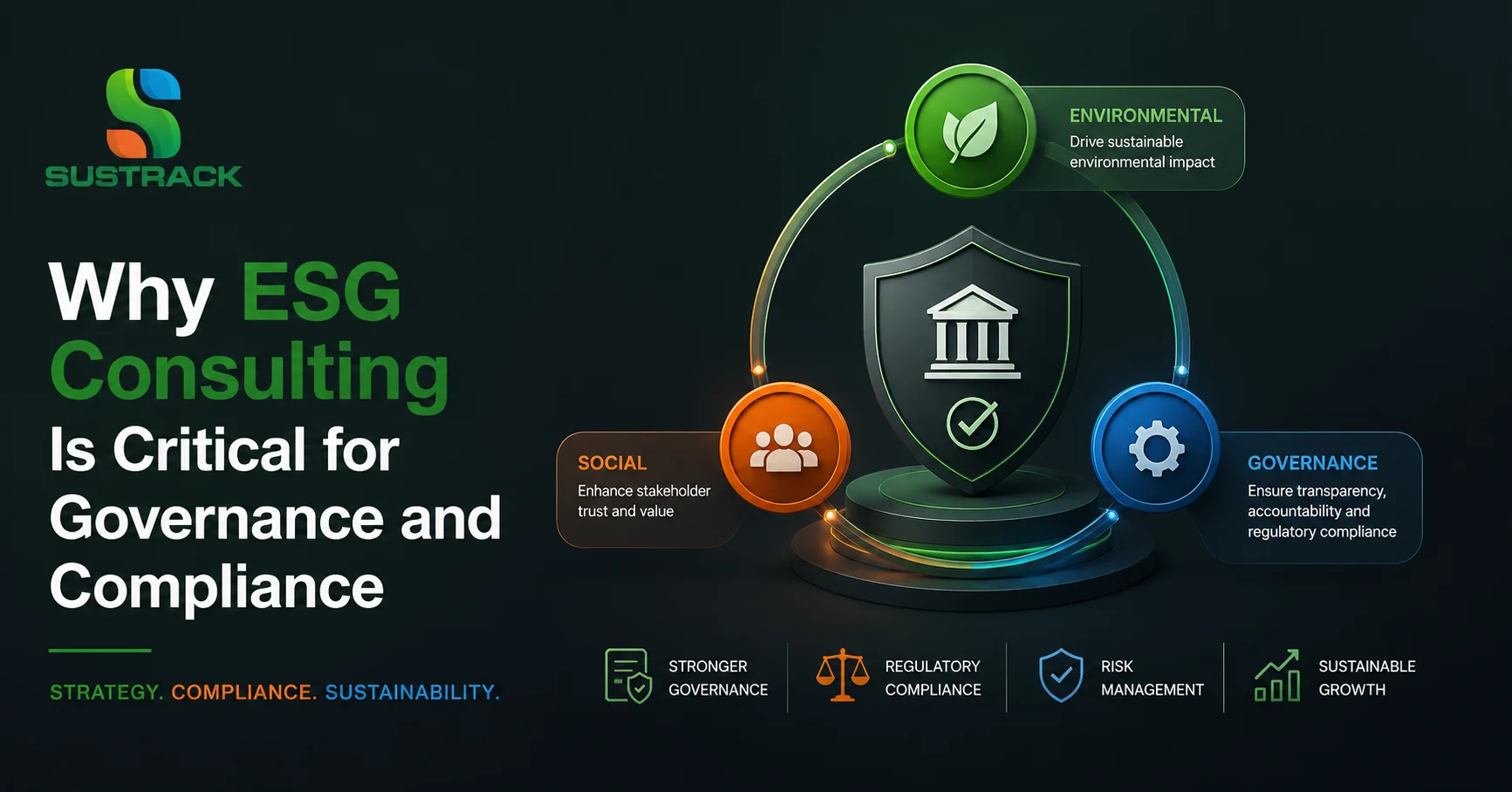
ESG has taken a toll from not being an option now for the companies, but a necessary step in order to control their carbon emissions. Increasing expectations from investors & regulators to demonstrate their responsibility to the environment, social, & governance by reducing emissions. They are required to demonstrate responsible practices, transparent reporting, and strong oversight.
Companies without ESG expertise engage ESG consultancies to achieve their net goals. ESG consulting is very important for companies to strengthen their governance structures and achieve long-term ESG compliance.
Expectations for ESG services are rising, and businesses are increasingly recognising that ESG expertise alone is insufficient to meet these demands, even within their internal teams. This is where ESG advisory services and independent consultants deliver strategic value by bridging the gap between regulatory requirements, governance frameworks, and real-world implementation.
Growing Regulatory and Investor Pressure
The primary point of the growing demand for ESG consulting is heightened regulatory and investor scrutiny. Governments and investors worldwide are introducing mandatory sustainability disclosures, stricter governance norms, and penalties for non-compliance.
Key pressure points businesses face:
- Mandatory ESG disclosures under national and global frameworks
- Investor demand for consistent, comparable ESG data
- Increased scrutiny of board oversight and risk management
- Linkage of ESG performance with access to capital
Investors today evaluate not just financial returns but also governance quality, ethical leadership, and compliance maturity. Weak ESG governance structures can signal unmanaged risks, potentially impacting valuation and investor confidence. Through targeted ESG advisory services, companies can align governance systems with regulatory expectations and investor benchmarks while avoiding compliance pitfalls.
Value of Independent ESG Consultants
Independent experts bring objectivity, specialised knowledge, and cross-sector insights that internal teams may not possess. ESG consulting firms operate at the intersection of regulation, governance, sustainability strategy, and reporting, making them uniquely positioned to guide organisations through complex ESG requirements.
How ESG consultants add value:
- Assess current governance and compliance gaps
- Interpret evolving ESG regulations and standards
- Design practical ESG roadmaps aligned with business goals
- Support leadership and boards in decision-making
Unlike internal teams, external advisors provide unbiased evaluations of ESG compliance risks and governance weaknesses. Well-structured ESG advisory services help organisations move from reactive compliance to proactive governance planning. This independent perspective strengthens accountability and enhances stakeholder trust.
Strengthening Governance Maturity
Strong ESG governance is the backbone of credible sustainability performance. It ensures that ESG responsibilities are clearly defined, risks are monitored, and decision-making processes are transparent. However, many organisations struggle with fragmented governance structures and unclear accountability. ESG consulting supports governance maturity by embedding ESG into leadership oversight and organisational culture.
Governance areas improved through ESG consulting:
- Board-level ESG oversight and accountability
- Defined roles for ESG risk management
- Integration of ESG into enterprise risk frameworks
- Transparent reporting and internal controls
Through specialised ESG advisory services, companies can establish governance frameworks that align with global best practices while remaining practical and scalable. Strong ESG governance ensures that sustainability commitments are backed by measurable actions and clear oversight mechanisms.
ESG Compliance as a Strategic Priority
For many organisations, ESG compliance initially begins as a regulatory obligation. However, forward-thinking companies quickly realise that compliance can evolve into a strategic advantage when managed effectively.
With the support of ESG consulting, businesses can:
- Identify applicable ESG laws, standards, and disclosure requirements
- Build systems to collect accurate and auditable ESG data
- Reduce legal, reputational, and operational risks
- Prepare for future regulatory changes
Rather than treating compliance as a checklist exercise, ESG advisory services help organisations embed compliance into everyday governance and operational processes. This proactive approach strengthens resilience and reduces long-term costs associated with non-compliance.
Linking ESG Consulting with Business Resilience
Beyond compliance, ESG consulting contributes directly to business resilience and long-term value creation. Companies with strong governance frameworks are better equipped to manage climate risks, social challenges, and ethical concerns.
Well-implemented ESG governance:
- Enhances board decision-making quality
- Improves transparency for investors and stakeholders
- Builds trust with regulators and financial institutions
- Supports sustainable growth and risk mitigation
By leveraging structured ESG advisory services, organisations can align governance systems with business strategy, ensuring that ESG initiatives support financial and operational objectives rather than operating in isolation.
Linking ESG Consulting with Business Resilience
Beyond compliance, ESG consulting contributes directly to business resilience and long-term value creation. Companies with strong governance frameworks are better equipped to manage climate risks, social challenges, and ethical concerns.
Well implemented ESG governance:
- Enhances board decision-making quality
- Improves transparency for investors and stakeholders
- Builds trust with regulators and financial institutions
- Supports sustainable growth and risk mitigation
By leveraging structured ESG advisory services, organisations can align governance systems with business strategy, ensuring that ESG initiatives support financial and operational objectives rather than operating in isolation.
Wrapping Up
As ESG expectations continue to evolve, governance and compliance can no longer be treated as secondary considerations. ESG consulting has become a critical enabler for organisations seeking to navigate regulatory complexity, meet investor expectations, and strengthen internal governance systems.
Through expert ESG advisory services, businesses gain clarity on compliance requirements, improve ESG governance maturity, and build credible, transparent frameworks that withstand scrutiny. Ultimately, strong governance supported by professional ESG guidance not only reduces risk but also positions organisations for sustainable, long-term success.
Frequently Asked Questions
What is ESG consulting?
ESG consulting involves professional services that help organisations design, implement, and manage environmental, social, and governance strategies while meeting regulatory and stakeholder expectations.
How do ESG advisory services differ from internal ESG teams?
ESG advisory services provide independent expertise, regulatory insights, and cross-industry best practices that internal teams may lack, especially during complex compliance or governance transitions.
Why is ESG compliance important for governance?
ESG compliance ensures that governance frameworks meet legal, regulatory, and ethical standards, reducing risk and improving transparency and accountability.
How does ESG governance impact investors?
Strong ESG governance signals effective oversight, risk management, and long-term stability, making organisations more attractive to investors and lenders.
Can ESG consulting help future-proof businesses?
Yes. ESG consulting helps organisations anticipate regulatory changes, strengthen governance maturity, and build resilient systems that adapt to evolving ESG expectations.